
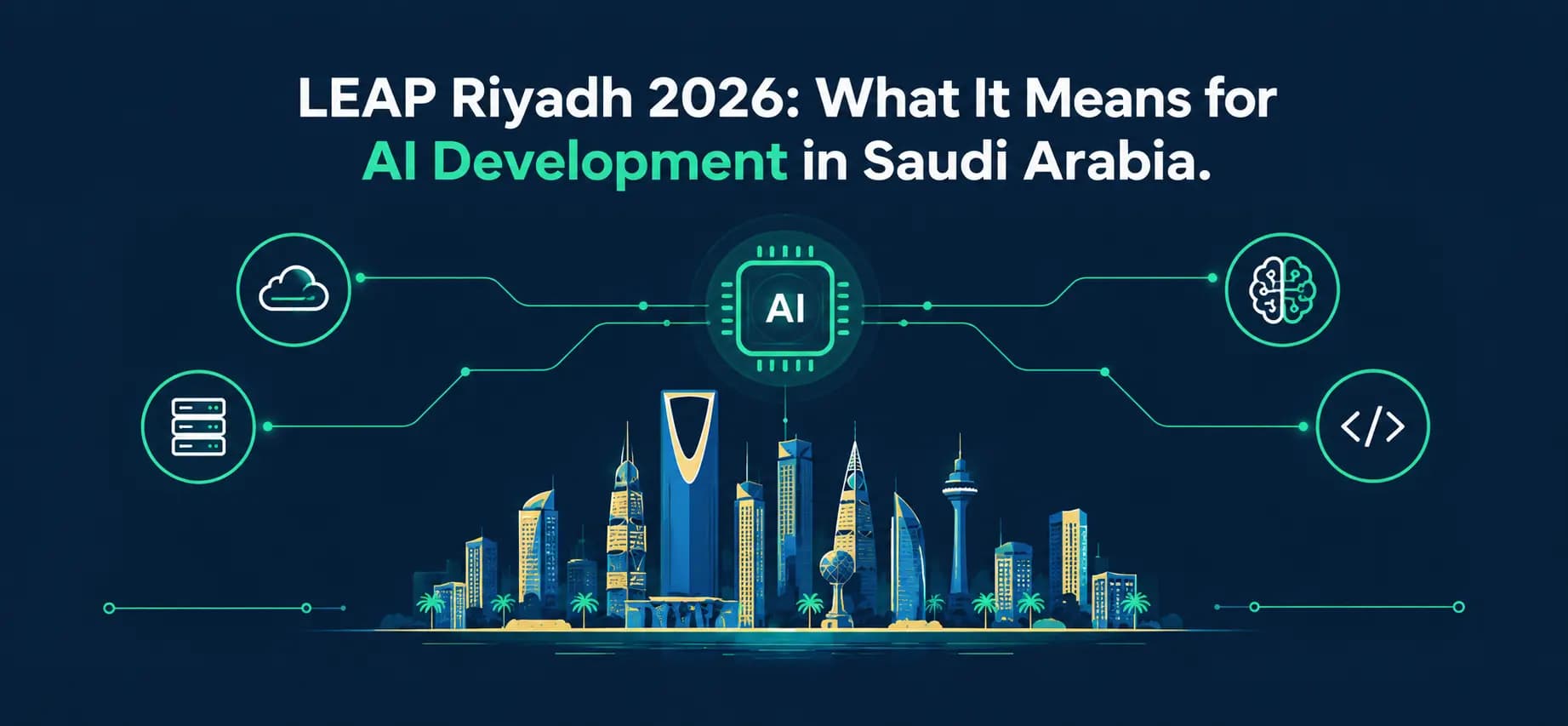
LEAP Riyadh 2026: Why It Matters for Saudi AI
Every year, LEAP Riyadh takes over the conversation for a few weeks. Companies announce partnerships, capital moves, and technology roadmaps get shared on stage with a confidence that makes execution look simple. The 2026 edition was bigger than most. The U.S.-Saudi Business Council documented significant technology investments and partnerships signed across the event, and Asharq Al-Awsat reported the conference wrapped up with nearly $15 billion in investment agreements. Those are not small numbers, and they are not theoretical. The capital is committed and the infrastructure is being built.
But here is what does not make the highlight reel. The technical lead who goes back to their desk in Riyadh or Dammam after the event and has to figure out what any of this actually means for the product they are responsible for shipping. The business owner trying to work out whether their internal data is clean enough to build on, whether their team has the right skills, and whether the use case they have in mind is worth the investment. LEAP Riyadh Saudi Arabia generates momentum. Turning that momentum into working software is a different conversation entirely, and it is the one worth having.
The Biggest AI Themes at LEAP Riyadh
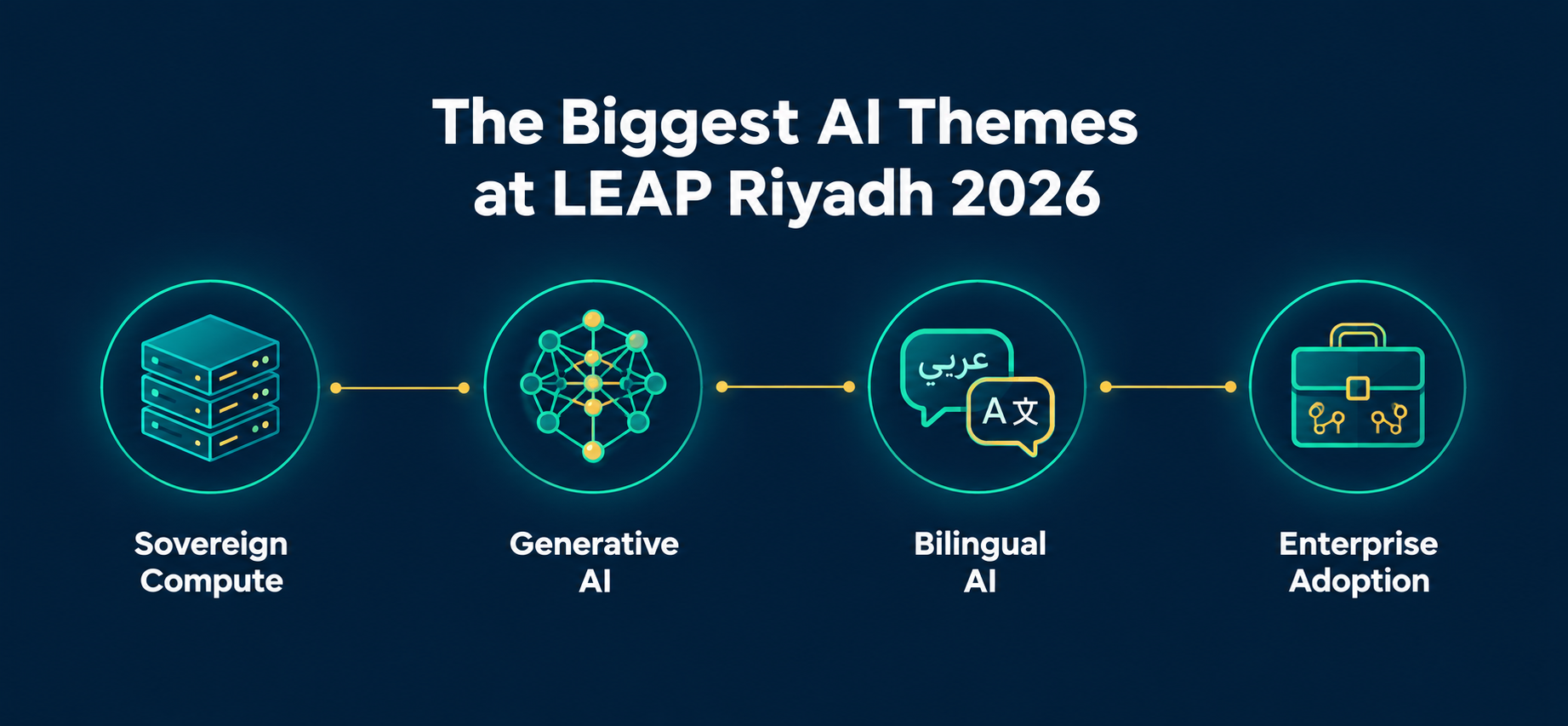
The LEAP exhibition Riyadh hosted was not short on concrete announcements. AMD reported partnerships advancing AI infrastructure across the Middle East, including collaborations with HUMAIN and Cisco to deploy AI-ready systems at scale. HUMAIN, Saudi Arabia's sovereign AI infrastructure company, featured prominently with offerings designed to bring enterprise-grade AI compute directly into the Kingdom. Generative AI Saudi Arabia deployments, Arabic language AI capability, and sovereign cloud expansion were recurring themes across the exhibition floor and keynote sessions.
What made Riyadh LEAP 2026 different from previous years was the shift in tone from possibility to deployment. Two years ago, conversations centered on pilots and proof-of-concepts. The AI innovations at LEAP this year leaned toward production timelines, enterprise integration, and sector-specific rollouts across healthcare, logistics, financial services, and government. The LEAP technology event has matured into a place where real procurement decisions follow the announcements, not just interest.
What These Announcements Mean for AI Development in Saudi Arabia
More local infrastructure means more deployment options, and that matters practically. For organizations processing sensitive customer records or proprietary operational data, hosting AI workloads inside Saudi Arabia removes the legal friction of routing data through overseas servers. The AI ecosystem Saudi Arabia is building is no longer theoretical. Compute capacity, model access, and cloud infrastructure are becoming genuinely available to domestic enterprise teams, not just to organizations with deep technical resources and international relationships.
The AI adoption in Saudi Arabia story is also moving sector by sector in ways that create specific opportunities. Healthcare organizations need diagnostic and triage AI that respects patient data residency rules. Financial services firms need fraud detection and compliance tools that integrate with existing core banking systems. Logistics companies need route optimization and document processing that works in Arabic and English simultaneously. Saudi AI investment is flowing toward these verticals, which means the demand for applied development is growing faster than the supply of teams who know how to build in this environment.
Infrastructure Is Not the Same as Implementation
A company can sign agreements for significant GPU capacity and still end up six months later with a tool nobody in the business trusts enough to use. This happens often enough that it deserves to be said plainly. The failure mode is not usually technical. Projects start with the technology rather than the problem. An internal policy assistant that works beautifully on five hand-picked PDFs in a demo will hit something very different in production: duplicate policies, conflicting guidance from different departments, users asking questions in ways nobody anticipated, and security requirements that were never fully mapped out during the build.
Production systems need teams that understand data validation, pipeline architecture, access control, user experience, and what happens when things go wrong. Infrastructure creates options, but businesses still need an AI development company in Saudi Arabia that can turn a use case into a secure, integrated, measurable product. The simplest test for whether a vendor conversation has reached production territory: if they can explain the model but not the data path, the failure mode, or who owns the system after launch, the conversation is still at the demo stage.
Five AI Projects Businesses Can Build After LEAP
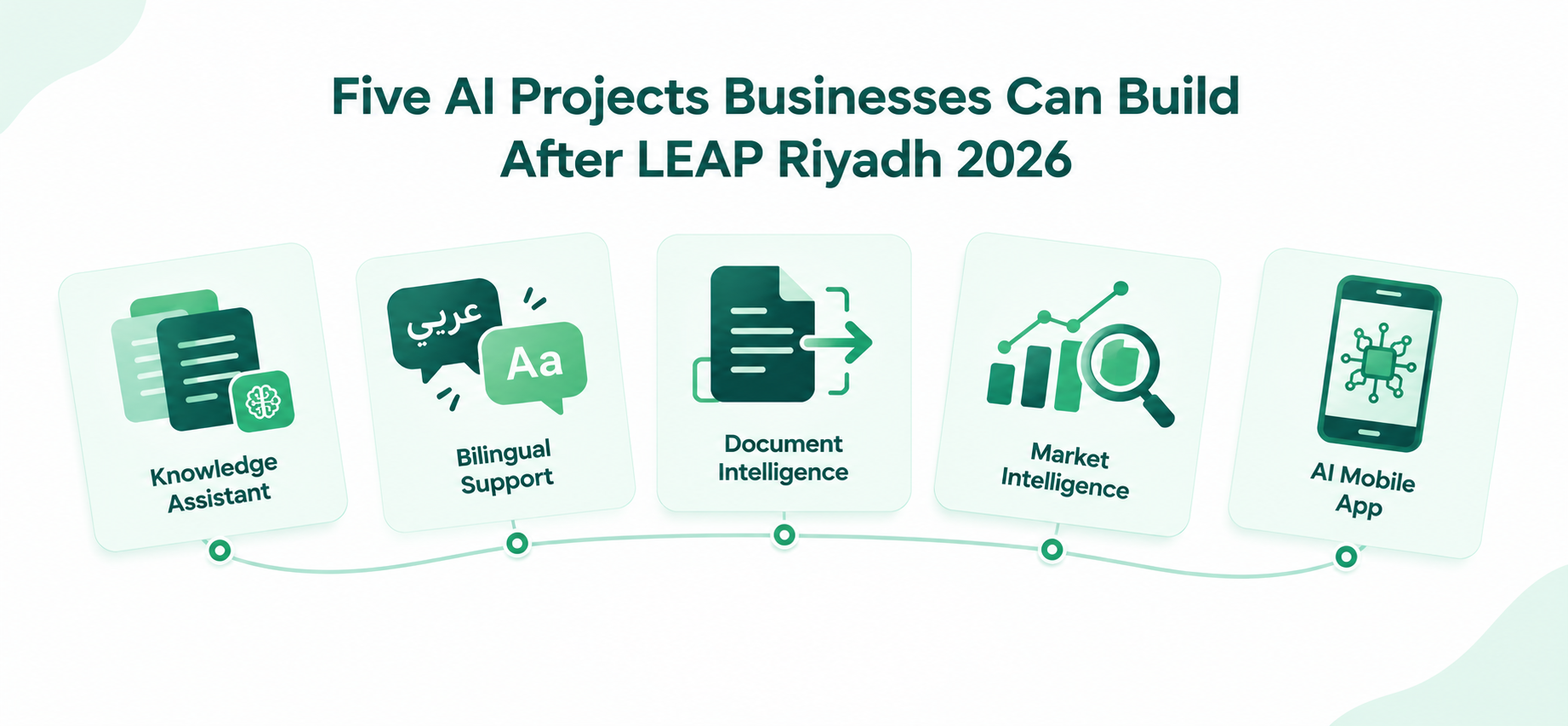
The strongest post-LEAP initiatives share one characteristic. They are narrow enough to actually finish, connected to data that already exists, and tied to a metric someone in the business genuinely cares about. Five categories consistently deliver results.
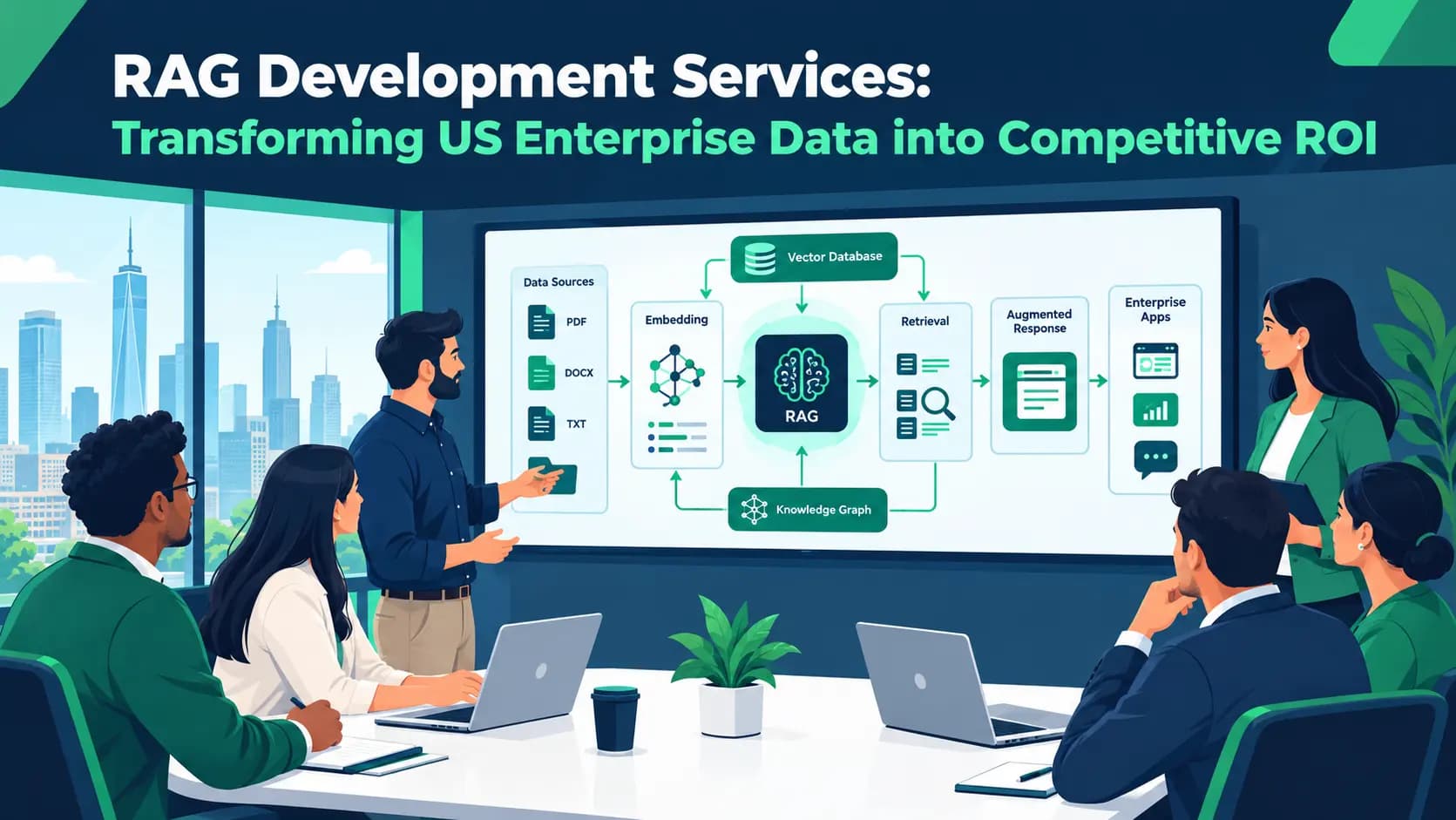
- RAG-based enterprise knowledge assistants help organizations sitting on years of accumulated procedures, compliance documents, and technical manuals build internal tools that ground every answer in approved records. The engineering priority is retrieval quality and citation links, not the chat interface.
- Arabic-English customer and employee assistants reduce overhead on service and IT teams, routing standard inquiries automatically and escalating complex ones without losing conversation context.
- Document intelligence and workflow automation addresses the persistent overhead of moving information from incoming files into enterprise systems, without a person touching each one.
- AI market and regulatory intelligence systems help strategy and legal teams stay current without spending the week inside PDF readers, ingesting verified publications and surfacing structured summaries.
- AI-enabled web and mobile products put capability where work actually happens. Toadster's work in AI-powered mobile app development treats model behavior, data access, latency, and user experience as a single engineering problem from the start.
How Toadster Turns AI Interest Into Production Systems
Toadster Technologies has shipped production AI systems across demanding domains where data quality, source accuracy, and real user workflows are non-negotiable. Two delivered projects illustrate the discipline required.
Juristo AI is a legal technology platform built for case-law retrieval, judgment summarization, and voice-assisted legal research. Legal AI is unforgiving. A hallucinated precedent does not just frustrate a user, it creates professional liability. The system was architected around verified retrieval, meaning every summary traces back to a confirmed statutory source before reaching the user. Bloombrain is an enterprise market intelligence platform combining autonomous research pipelines with real-time vector querying. It ingests verified external publications alongside internal records, queries them in real time, and surfaces structured insights teams can act on without spending hours validating sources first.
These projects are not presented as Saudi-specific deployments or as evidence of compliance with Saudi regulations. They demonstrate the production engineering discipline needed to move AI beyond a demo: reliable data pipelines, retrieval-grounded outputs, evaluation workflows, and scalable application architecture. Toadster applies this same approach to production-ready AI solutions for Saudi businesses, adapting every delivery plan to the client's data, workflow, infrastructure, and governance requirements.
Want to Turn LEAP Momentum Into a Working AI Product?
The announcements at LEAP Riyadh 2026 signal that Saudi Arabia’s AI market is ready to move from infrastructure headlines to practical business applications. The organisations that create real value will not be the ones that buy the most tools or attend the most sessions. They will be the ones that identify a specific operational problem, choose the right delivery approach, and build an AI system their teams can trust and use every day.
Toadster helps businesses turn AI interest into a practical delivery plan - covering use-case validation, data readiness, architecture, integrations, evaluation, and the path to production. If you have an AI idea, an existing pilot, or a workflow that needs improvement, speak to our team about what it would take to build it properly.