
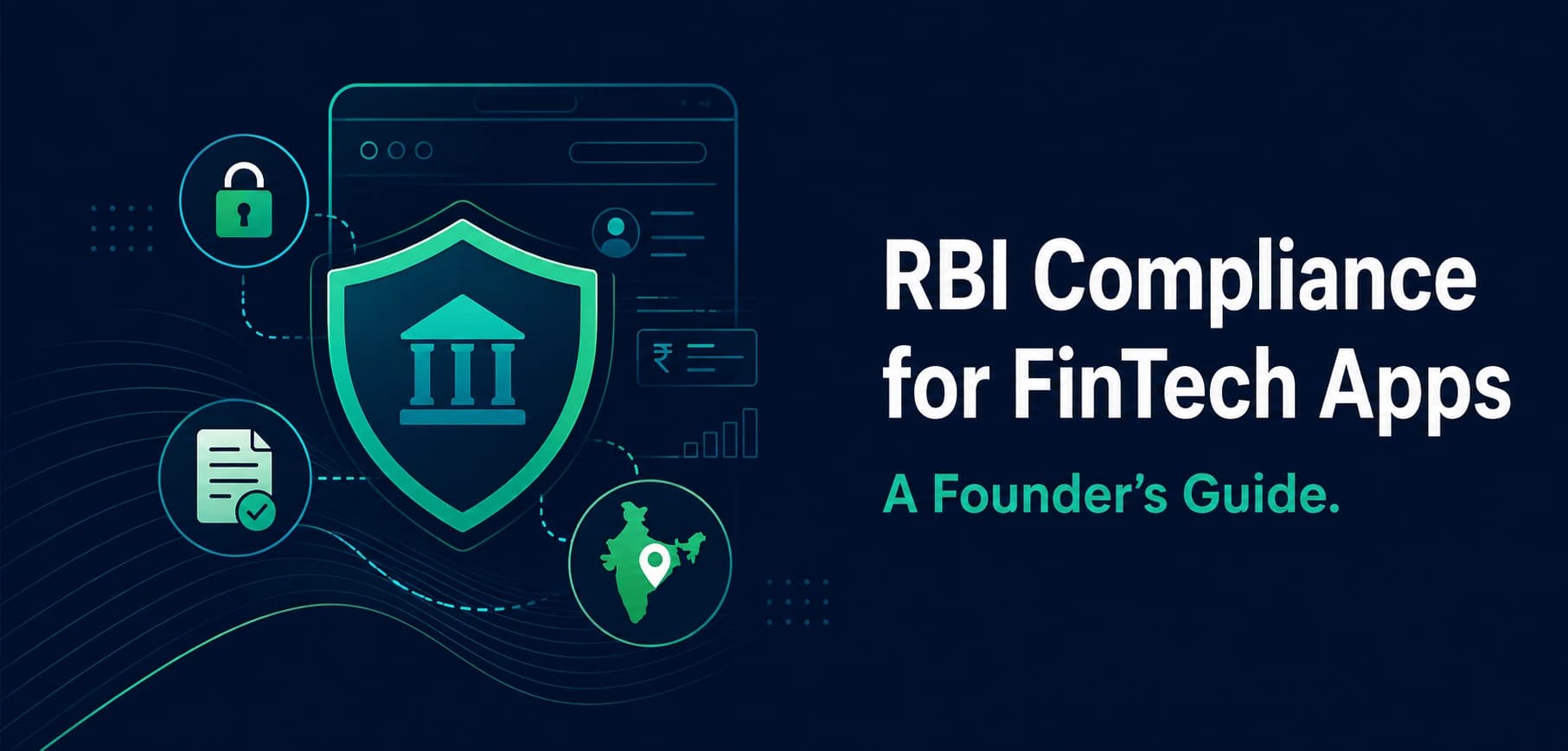
RBI Compliance for FinTech Apps: A Founder's Guide
This isn't legal advice - for actual licensing decisions, talk to a qualified fintech lawyer. What this is: a plain-language translation of the regulatory rules that shape how an Indian fintech app actually needs to be built. Founders who understand this before writing a spec ship without a mid-project rebuild. Founders who treat it as a launch-week checklist usually don't.
Mumbai is where a disproportionate share of India's fintech founders end up building, mostly because it's where the banks, NBFCs, and payment partners they'll eventually need to work with are headquartered. That proximity doesn't make the rules any lighter - if anything, it means the partners reviewing your app before certifying an integration are more familiar with what non-compliant architecture looks like, not less.
Quick answer: Indian fintech apps need to get five things right at the architecture stage, not the legal-review stage: payment data stored only in India, a proper KYC/AML flow if you're onboarding financial users, a lending architecture where funds never touch your own accounts (if you're in lending at all), payment collection through a licensed aggregator rather than your own rails, and DPDP Act-compliant consent and data handling. A software development company in Mumbai that's actually built fintech products before will treat these as day-one architecture decisions, not features added before a partner audit.
Rule 1: Data Localisation - Decide Before Your First Deploy
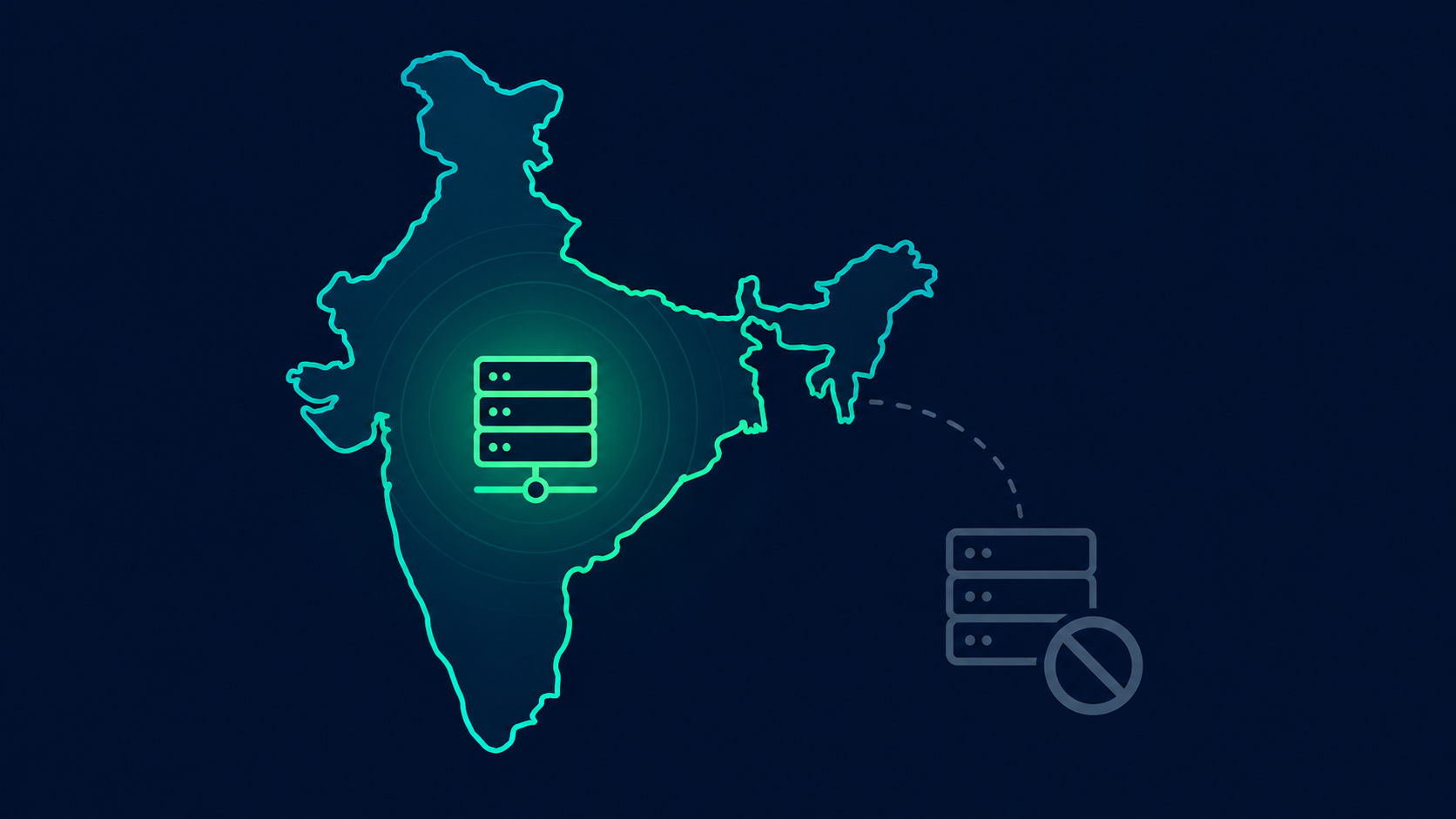
RBI's 2018 directive on payment system data requires that payment-related data be stored within India. There are narrow carve-outs for certain cross-border transaction legs, but the safe default for a domestic fintech is simple: India-region infrastructure for anything payment-adjacent, from day one.
The part founders miss most often isn't their own infrastructure - it's their vendor stack. Your analytics tool, your customer support platform, your error-tracking service all touch user data too, and if any of them store it outside India, your product inherits that exposure even if your own servers are compliant. Auditing every third-party vendor's data storage geography before integration costs nothing. Discovering the problem after a partner's due-diligence review costs a migration project.
Rule 2: KYC and AML Aren't a Form, They're a Flow
If your product operates through a bank, NBFC, or licensed payment partner, their KYC and AML obligations flow down into how you're allowed to onboard users. In practice, that means verified identity - PAN, Aadhaar-based options, or video KYC - before any meaningful account activity, plus ongoing monitoring obligations your data model needs to support, not just your onboarding screen.
The practical build decisions: integrate with an established KYC verification vendor rather than building identity verification from scratch, design onboarding as a resumable process rather than a single linear form (real users abandon mid-KYC constantly and need to pick up where they left off, not start over), and store every verification artifact with a timestamp and audit trail - your banking or PA partner's compliance team will ask for this during onboarding review, and "we didn't log it" is not an acceptable answer at that stage.
Rule 3: Digital Lending - Who's Allowed to Touch the Money
RBI's Digital Lending Guidelines reshaped how lending products in India are architected, around one core principle: loan disbursal and repayment must flow directly between the borrower and the regulated lending entity - never resting in your platform's own accounts, even briefly. On top of that, borrowers are entitled to clear upfront disclosure of the full cost of credit, a cooling-off period, and explicit, logged consent for how their data gets used.
For a platform, this means the architecture has to treat your product as an orchestration layer, not a custody layer - funds pass through, they don't stop. It means building a disclosure step that renders full cost-of-credit information before a borrower can accept a loan, not buried in terms and conditions. And it means a grievance-redressal path that surfaces a real, named contact inside the product, not a generic support email.
Lending compliance in India is, in a real sense, a product-architecture decision before it's a legal one. Teams that design around this from the first sprint tend to move faster overall than teams that bolt it on before a partner review flags the gap.
Rules 4 & 5: Payment Aggregation and the DPDP Act
Payment aggregation in India requires a specific RBI license with real net-worth requirements most early-stage fintechs won't clear - which is exactly why the standard, sensible architecture for most fintech products routes payment collection through an already-licensed aggregator rather than building custody infrastructure in-house. The practical decision is mostly a business one: stay on licensed payment rails until your volume and maturity genuinely justify pursuing your own license, and design settlement flows so funds never rest in accounts you control.
The DPDP Act 2023 applies to personal data broadly, and financial data sits squarely inside its scope. The core obligations: consent has to be specific to each use and genuinely withdrawable, not a blanket one-time checkbox; data collection should be limited to what the product actually needs, not gathered speculatively for later use; users need a real path to request deletion of their data; and any breach carries a notification obligation that sits with you, not just your infrastructure provider.
The practical build decisions: a consent registry that tracks who agreed to what, when, and under which version of your terms; deletion workflows that actually cascade through backups and third-party vendors, not just your primary database; and role-based access controls with logging on any read of personal financial data - the same audit-trail discipline the KYC and lending rules already demand elsewhere in the product.
The Compliance Checklist Worth Printing
Every item here is cheap to design in from the start and expensive to retrofit later:
- India-region cloud infrastructure selected before the first deployment
- Full vendor stack audited for where user data actually lives - not just your own servers
- A resumable KYC flow, integrated with a real verification vendor, with logged audit artifacts
- Payment collection routed through a licensed aggregator, with card data kept out of your own systems
- For lending products specifically: funds flow only between the regulated entity and the borrower, never through your accounts
- Cost-of-credit disclosure rendered and consent logged before loan acceptance
- A consent registry and real data-deletion workflow for DPDP Act obligations
- Immutable audit trails on money movement and sensitive admin actions
- A security audit scheduled with a CERT-In empanelled firm before launch, not after a partner flags the gap
- A visible grievance-redressal path with a named point of contact inside the product
What Founders Get Wrong Most Often
The single most expensive mistake isn't skipping a rule - it's sequencing. Teams that treat compliance as architecture, decided in the first sprint, tend to pass partner due diligence on the first attempt and ship close to schedule. Teams that treat it as a pre-launch checklist tend to discover, weeks before they meant to go live, that their infrastructure is hosted in the wrong region or their lending flow routes money in a way the guidelines don't allow - and both of those are expensive to fix after the fact, not before.
This is really the same lesson as how to vet a partner for any Mumbai software build: the vendor who asks about your regulatory obligations in the first scoping call is telling you something different than the one who treats it as a feature to add later.
What This Looks Like With Toadster
Toadster works as a software development company in Mumbai building fintech products with these five anchors treated as architecture from the start - KYC flows, audit trails, consent registries, and India-region infrastructure decided in the design phase, not retrofitted before a partner review. If your product needs licensing or legal structuring before a single line of code makes sense, we'll say so upfront rather than start building around a gap. Our fintech industry work covers the fuller picture - payment platforms, loan management systems, fraud detection, and KYC/AML compliance platforms - for teams building beyond a single app.
If you're scoping a fintech build, our software development team can walk through what a compliant architecture actually looks like for your specific product - payments, lending, or a broader financial platform.
Build to the Rules, Not Around Them
Every one of these regulatory anchors rewards the same decision: deciding early. A fintech app built with compliance as part of its architecture from the first commit tends to move through partner due diligence in one pass. One that treats compliance as a launch-week checklist tends to discover, at the worst possible time, that a core piece of its infrastructure needs to be rebuilt.
If you're scoping a compliant fintech product, talk to Toadster - we'll tell you honestly what needs legal structuring before you spend the budget on code.