
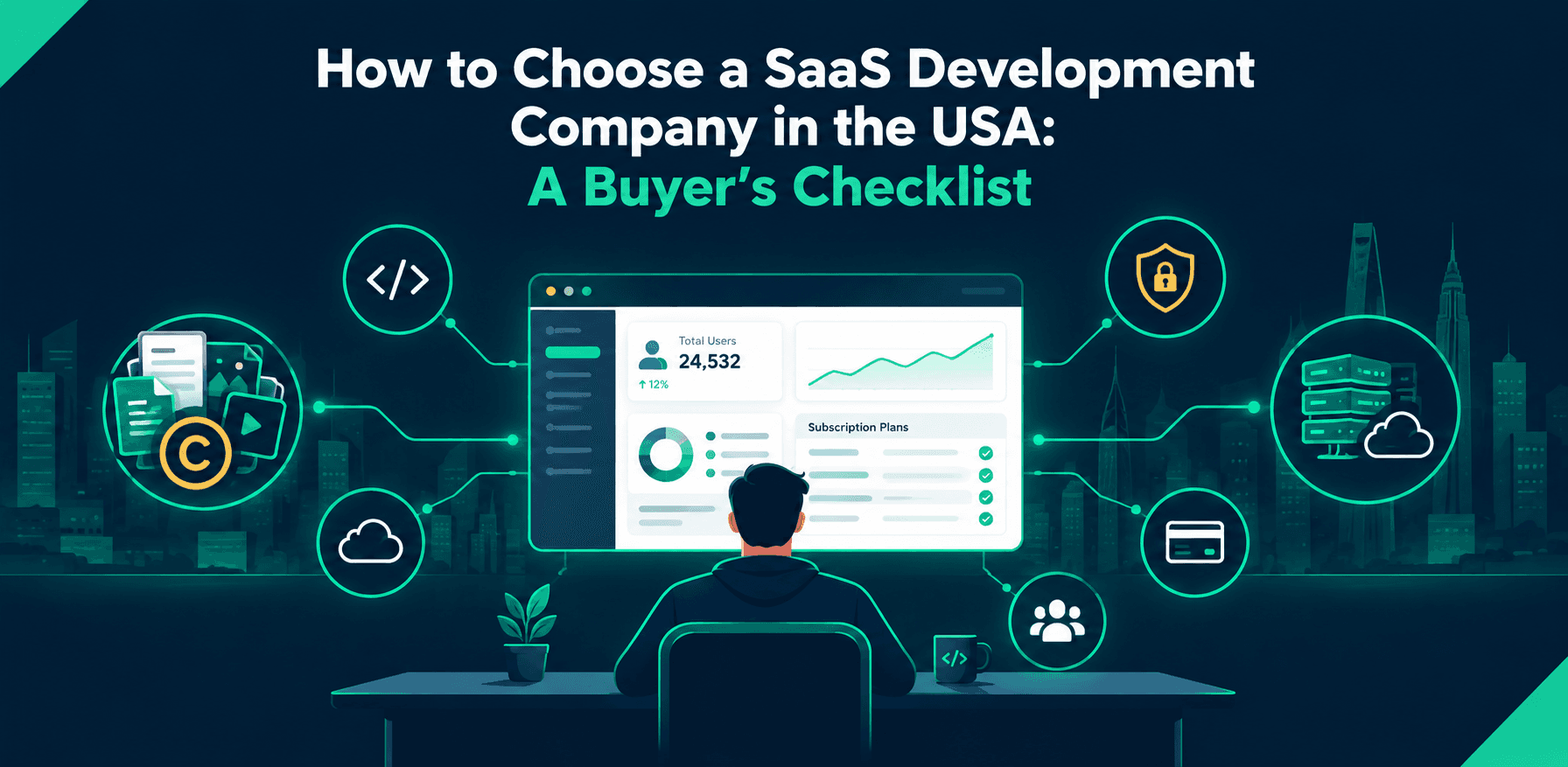
How to Choose a SaaS Development Company
Most SaaS projects don't fail because the idea was bad. They fail because the wrong development partner was chosen - one who gave a confident quote without understanding the product, assembled a team the client never met, and disappeared six months after launch.
This checklist exists so that doesn't happen to you.
Quick answer: The right SaaS development company will ask more questions than they answer in the first meeting, show you who will actually build the product, be clear about what you own when the engagement ends, and have a realistic plan for what happens after launch. Everything else is secondary.
Start With Your Own Brief, Not a Vendor's Proposal
A vendor can only price and plan accurately when they understand what you are building. Before you contact anyone, document the basics:
- The problem your product solves and who it solves it for
- The core workflows required at launch versus later phases
- Third-party integrations you need - payments, CRM, identity, analytics
- Any compliance or data-handling requirements relevant to your market
- Your target launch window and budget range
You do not need a 40-page specification. You need enough clarity that a vendor's first question is about your users - not "what's your budget?"
If you are still validating the idea, read our guide on building your MVP before shortlisting developers.
Ask Who Will Actually Build It
This is the question most buyers forget. A polished deck and a senior salesperson are not the team who will write your code. Before signing, ask:
- Who is the technical lead or solution architect on this project?
- Who are the frontend and backend developers?
- What percentage of their time is allocated to your project in the first 90 days?
- Who makes the final technical decisions?
Request to meet the technical lead before the contract is signed. That one conversation tells you more than any proposal document. If the vendor can't arrange it, treat that as a signal.
Also ask how they handle staff changes. Turnover happens. A credible partner maintains documentation and has a handover process that does not leave you dependent on a single engineer with no backup.
Verify SaaS Experience Specifically
Building a marketing site is not the same as building a SaaS product. Building a mobile app is not the same either. SaaS development typically involves multi-tenant architecture, user roles and permissions, subscription or billing logic, admin dashboards, third-party integrations, ongoing release cycles, and post-launch monitoring.
When reviewing a portfolio, ask:
- Is this a live SaaS product or a one-off application?
- What did your team specifically deliver - discovery, UX, backend, integrations, QA, DevOps?
- What was the hardest technical or delivery problem on this project?
- Can I speak to someone on the client side?
Relevant experience does not mean they have built your exact product. It means they have solved similar problems and can explain how.
At Toadster, projects like Juristo AI, Bloombrain, and Fire AI reflect the kind of product-level thinking we bring to SaaS engagements - where the challenge is not just writing code but solving real operational problems through software.
Evaluate the Delivery Process Before You Commit
A strong SaaS development company should be able to walk you through how they move from a brief to a launched product. Not in vague terms - specifically. Ask them to describe:
- How they run discovery and define scope
- How UX and prototyping is handled before development begins
- How development is structured - sprint length, demo cadence, backlog ownership
- How QA is integrated, not bolted on at the end
- How releases and deployments are managed
- How post-launch issues are handled
If the answer to most of these is "we'll figure that out together," that is not agility. That is a warning sign.
Strong product management at the start of an engagement - discovery workshops, user story mapping, prioritisation - reduces the cost of changes later and gives you a shared language with the engineering team throughout the build.
Use a Scorecard to Compare Vendors
Do not compare proposals by price alone. Use the same criteria for every vendor.
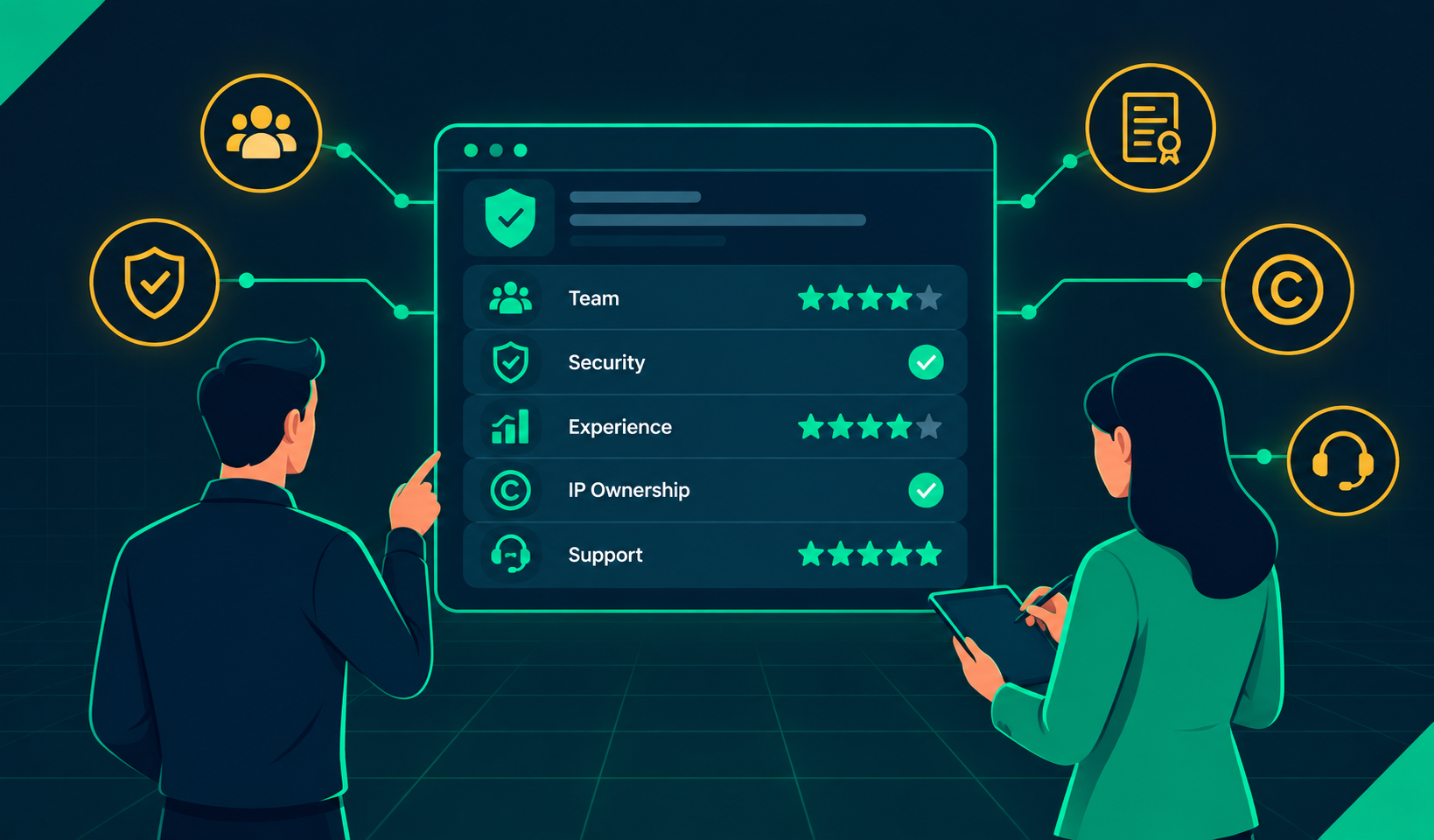
Copy this into your internal evaluation document. Score based on evidence - not on how confident the vendor sounds.
Evaluation Area | Score 1–5 | What to Verify |
|---|---|---|
Relevant SaaS experience | Live examples, scope, outcomes | |
Discovery and planning process | Workshops, MVP definition, risk identification | |
Named delivery team | Roles, seniority, availability | |
UX/UI capability | Flows, prototypes, usability | |
Technical architecture | Scalability, integrations, documentation | |
QA and release process | Testing approach, staging, deployment | |
Security and data handling | Access controls, backups, vulnerability process | |
Communication and reporting | Cadence, escalation, time-zone coverage | |
Pricing transparency | Assumptions, scope, change-request terms | |
IP and code ownership | Repository access, account ownership, handover | |
Post-launch support | Maintenance, incident response, roadmap capacity |
Confirm What You Own Before Signing
This is where many SaaS engagements go wrong, quietly and expensively. Before you sign anything, your agreement should clearly address:
- Ownership of source code, designs, and all deliverables
- Access to the code repository throughout the engagement - not just at the end
- Ownership and admin access to cloud accounts, domains, analytics tools, and app-store accounts
- Confidentiality and data-handling obligations
- Notice periods, termination terms, and what the final handover includes
A vendor who resists clarity on any of these points is worth questioning. The goal is not to plan for failure - it is to ensure your business is never held hostage by inaccessible infrastructure or undocumented systems.
Have qualified legal counsel review your contract and any data-protection obligations specific to your market. This article is practical guidance, not legal advice.
Red Flags Worth Taking Seriously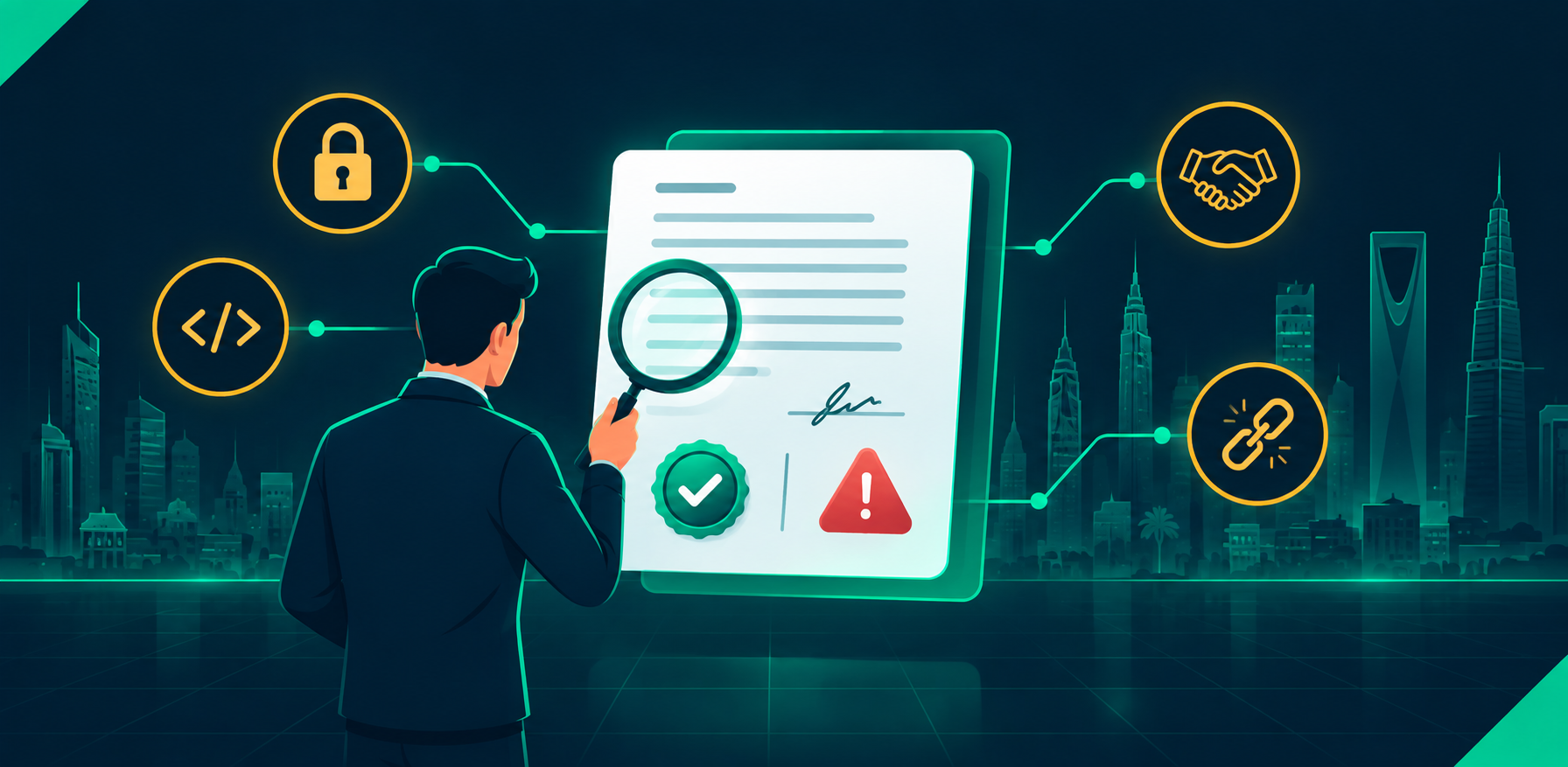
One red flag is a prompt for a deeper question. Several red flags together is a reason to walk away.
Be cautious when a vendor:
- Gives a firm price without asking meaningful questions about your product
- Cannot name the people who will work on your project
- Has no portfolio examples relevant to SaaS, subscriptions, or multi-user platformsIllustrated checklist of red flags to watch for when evaluating a SaaS development company before signing a contract
- Focuses only on features and does not mention QA, deployment, security, or maintenance
- Is vague about what happens after launch
- Will not clarify code ownership or repository access
- Pressures you to sign before you understand scope, team, and commercial terms
What Happens After Launch Matters as Much as the Build
Launching is not the finish line. After go-live, you will need to address user feedback, fix bugs, push security updates, manage infrastructure costs, monitor performance, and plan the next roadmap phase.
Ask every vendor you evaluate:
- What is the warranty period for defects after launch?
- Who monitors uptime, errors, and performance?
- How are support requests triaged and how quickly are critical issues addressed?
- Is there a dedicated team available for ongoing development?
- What does a transition look like if we bring development in-house?
A credible answer is specific. "We provide ongoing support" without a process behind it is not an answer.
Working With Toadster
Toadster provides SaaS development services for founders and businesses building scalable software products - from early discovery through to post-launch support. Our work spans product strategy, UX/UI, engineering, QA, DevOps, and ongoing maintenance.
If you have a SaaS product you are planning or already building, talk to our team about where you are and what you need.