
From Ideas to Scalable Systems: How Software Development Drives Business Growth in Mumbai
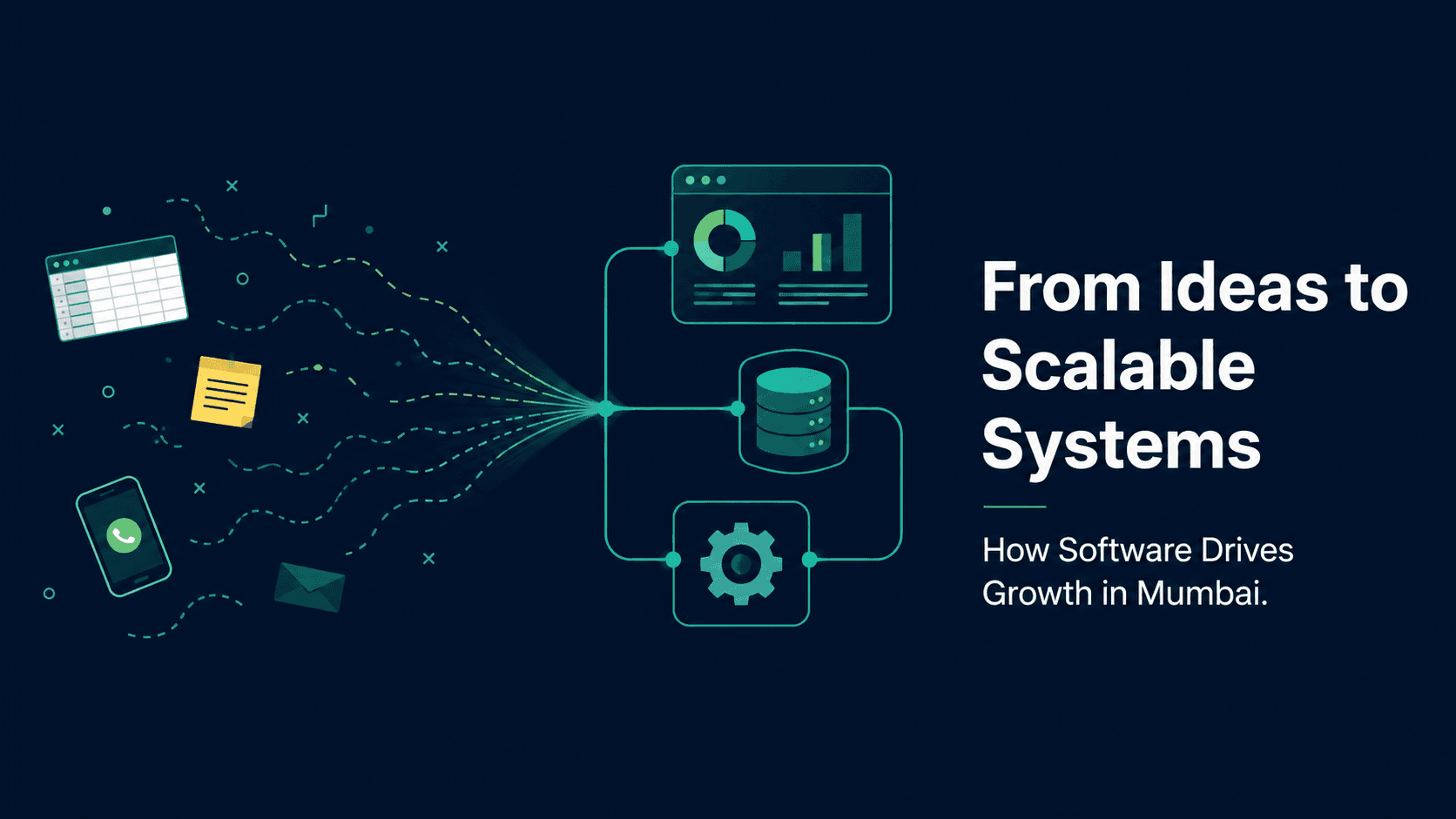
Mumbai doesn't have a shortage of good ideas. Walk into almost any growing business in the city - a logistics operator in Andheri, a fintech in BKC, a retail chain expanding out of a single Colaba storefront - and ambition is rarely the problem. What's usually holding growth back is quieter and less visible: a spreadsheet three people are editing at once, a WhatsApp thread standing in for a customer database, a process that works fine at ten orders a day and falls apart at two hundred.
Custom software doesn't fix ambition. It removes the ceiling that manual, disconnected tools eventually put on it.
Quick answer: businesses in Mumbai are shifting from generic, off-the-shelf tools to custom-built software mainly because of four pressures - operational complexity that spreadsheets can't handle, the need for real-time data instead of end-of-week reports, growth that off-the-shelf tools weren't designed to absorb, and customer expectations shaped by apps that just work. A capable software development company in Mumbai builds the specific system a business actually needs, not a generic template stretched to fit.
Why Off-the-Shelf Tools Stop Working
Generic software is built to serve the average case across thousands of businesses. That's exactly what makes it start failing once a company's operations get specific enough to have real edges - a workflow that doesn't map cleanly onto a template, an integration the tool was never built to support, a reporting need three steps more detailed than what the dashboard offers.
The failure point tends to look the same across industries: someone starts building a workaround. A second spreadsheet to patch what the first tool can't do. A manual export-and-reformat step between two systems that don't talk to each other. Those workarounds are invisible individually and expensive collectively - they're where staff time quietly disappears, and where a small data entry error becomes a real business mistake nobody catches until a customer does.
Custom software solves this by being built around how the business actually operates, not the other way around.
What Custom Software Actually Replaces
Most custom builds fall into a handful of recognizable categories, each solving a specific, recurring operational pain:
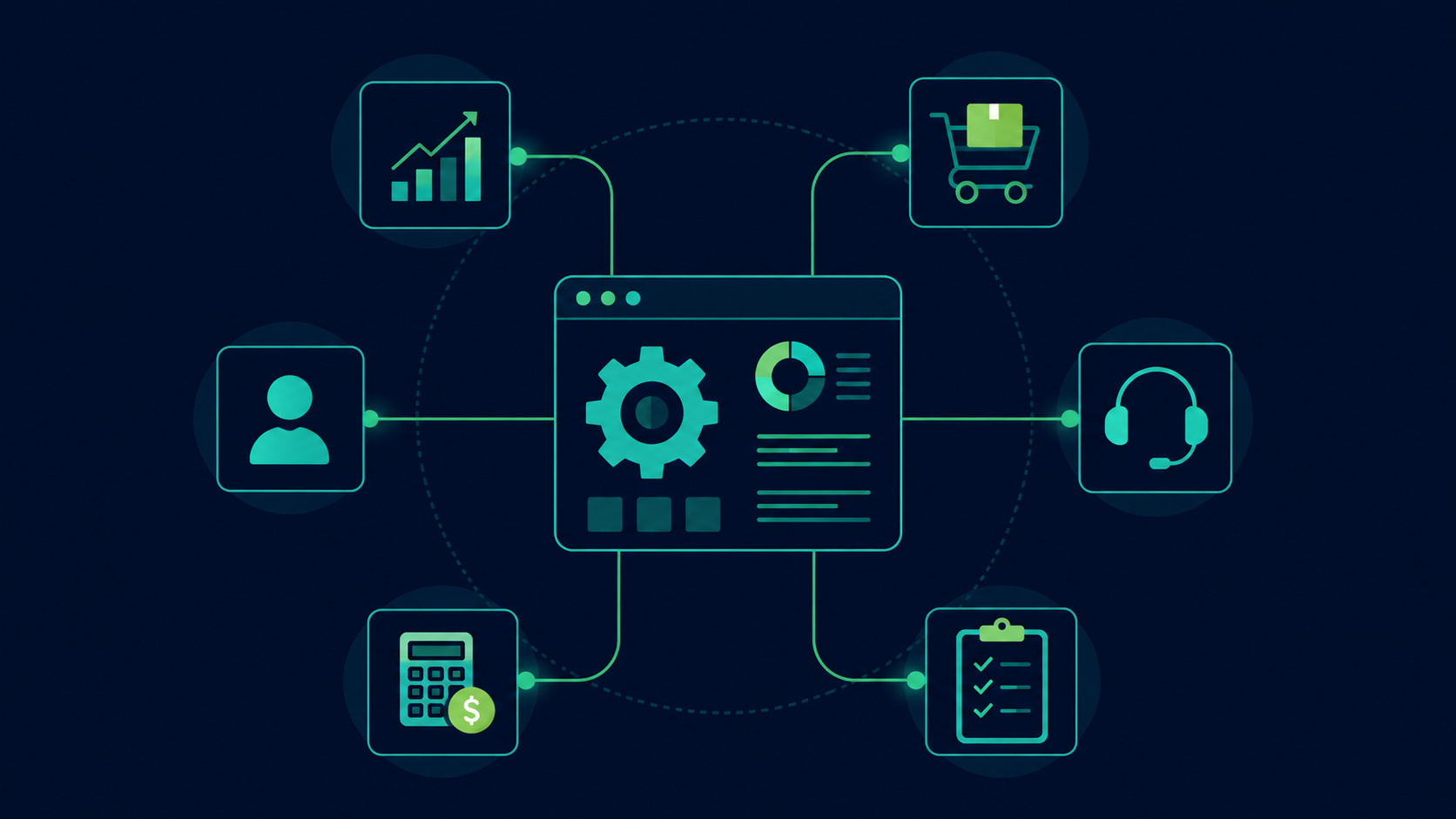
CRM systems replace the scattered spreadsheet-and-inbox approach to managing leads and customer relationships with one place where sales activity, customer history, and follow-ups actually live together.
ERP and operations platforms bring finance, inventory, and operational data into a single system instead of three disconnected tools that each tell a partial version of the truth.
Custom dashboards turn raw operational data into something a manager can actually act on in real time, instead of a report someone compiles manually once a week - by which point the decision it should have informed is already made.
SaaS platforms let a business turn what used to be an internal tool or a manual service into a scalable, subscription-based product of its own.
Automation tools take over the repetitive, rules-based work - data entry, status updates, routine notifications - that consumes staff time without requiring real judgment.
None of these are abstract categories. They're the direct answer to a business owner's actual sentence: "we're spending too much time on X and I don't trust the numbers we're getting from Y."
What Different Mumbai Industries Actually Build
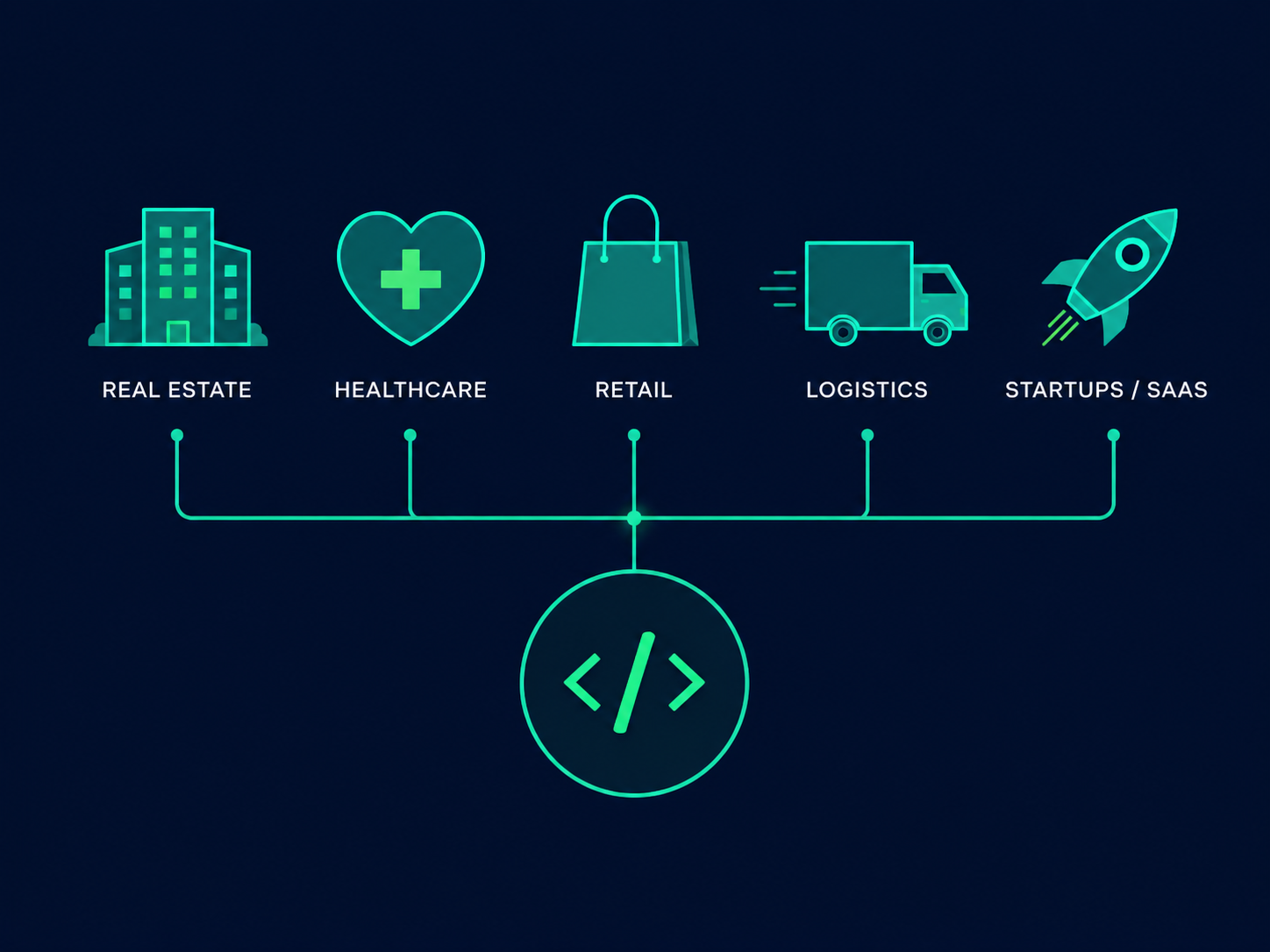
Real estate firms build property and client management systems that track listings, site visits, and buyer follow-ups in one place - replacing the broker's personal notebook-and-memory system that doesn't scale past a handful of active deals.
Healthcare providers build patient and appointment management systems that reduce no-shows, keep records consistent across visits, and give front-desk staff a single source of truth instead of a paper register and a separate billing spreadsheet.
Retail and e-commerce businesses build inventory and order management systems that prevent the two most common retail failures - selling something that's actually out of stock, and losing track of what's actually selling.
Logistics operators build tracking and dispatch automation that replaces phone-call-based coordination with real-time visibility into where a shipment actually is, which matters enormously once volume passes what a small ops team can track manually.
Startups and SaaS founders build the product itself - the platform is the business, which is why getting the architecture right from the first version matters more here than almost anywhere else. If you're at this stage, our MVP guide covers how to scope a first build without over-investing before the idea is validated.
What a Real Development Process Looks Like
A software build that skips steps to move faster almost always ends up slower overall, because the shortcuts show up later as rework. A disciplined process moves through the same core phases regardless of project size: requirement analysis that maps the actual current workflow, not an idealized version of it; architecture planning that decides how the system will hold up under real future load, not just today's volume; UI/UX design that gets tested with real users before development locks in; development and integration with the systems the business already depends on; genuine testing rather than a quick pre-launch check; and a deployment that includes a real support plan, not a handoff and a goodbye.
Skipping the early phases to "just start building" is the single most common reason a software project ends up costing more and taking longer than planned - the cost of a wrong assumption compounds the later it's caught.
Why This Is a Long-Term Investment, Not a Line-Item Cost
The return on a well-built custom system compounds in ways a one-time tool purchase doesn't. Automation reduces the ongoing cost of manual work every single month, not just once. Centralized data means a decision-maker is working from one accurate picture instead of reconciling three conflicting ones. And a system genuinely built to scale means the next stage of growth doesn't require ripping out and replacing the foundation - a real risk with tools chosen for where the business was two years ago, not where it's headed.
The businesses that treat custom software as a cost to minimize tend to end up rebuilding sooner and more expensively than the ones that treat it as infrastructure worth investing in properly the first time.
What This Looks Like With Toadster
Toadster works as a software development company in Mumbai building exactly the kinds of systems described above - CRMs, ERPs, custom dashboards, SaaS platforms, and automation tools - scoped around how a business actually operates rather than a generic template. For businesses where AI is genuinely part of solving the problem, not just a feature to check a box, our software development team can walk through what a combined software-and-AI build would actually look like for your specific operation.
The Real Shift
Mumbai businesses aren't struggling because they lack good ideas. They're struggling because the systems underneath those ideas were never built to carry the weight of real growth. Custom software is what closes that gap - not by replacing ambition, but by removing the ceiling manual, disconnected tools eventually put on it.
If you're weighing whether your operation has outgrown its current tools, talk to Toadster for a real conversation about what a custom system would actually look like for your business.