
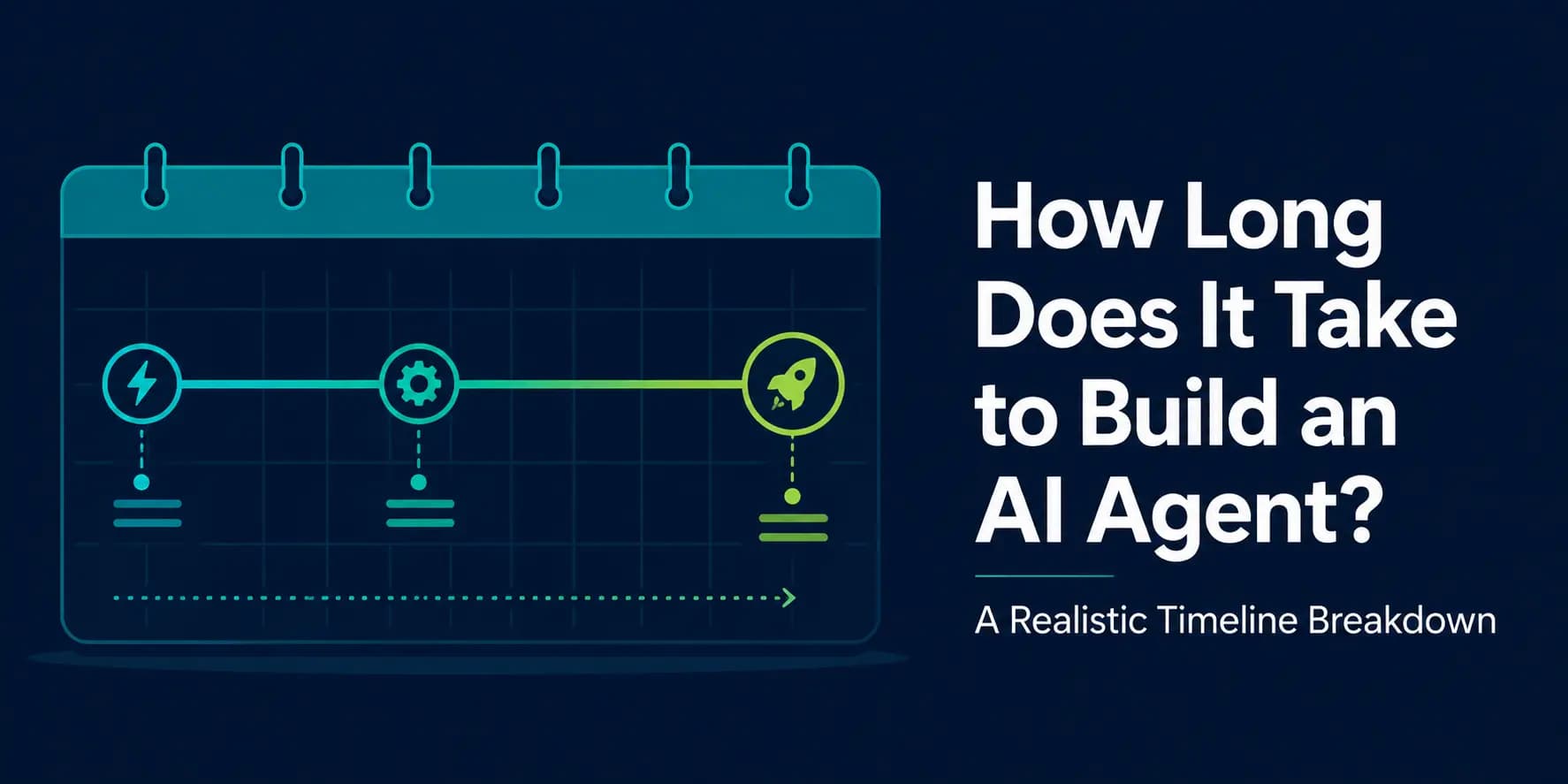
How Long Does It Take to Build an AI Agent? A Realistic Timeline Breakdown
"How fast can this be live?" is usually the second question in any AI agent conversation, right after cost. It's also the one people get the worst information about - mostly because the honest answer depends on a handful of variables nobody asks about until week three, when the project's already behind.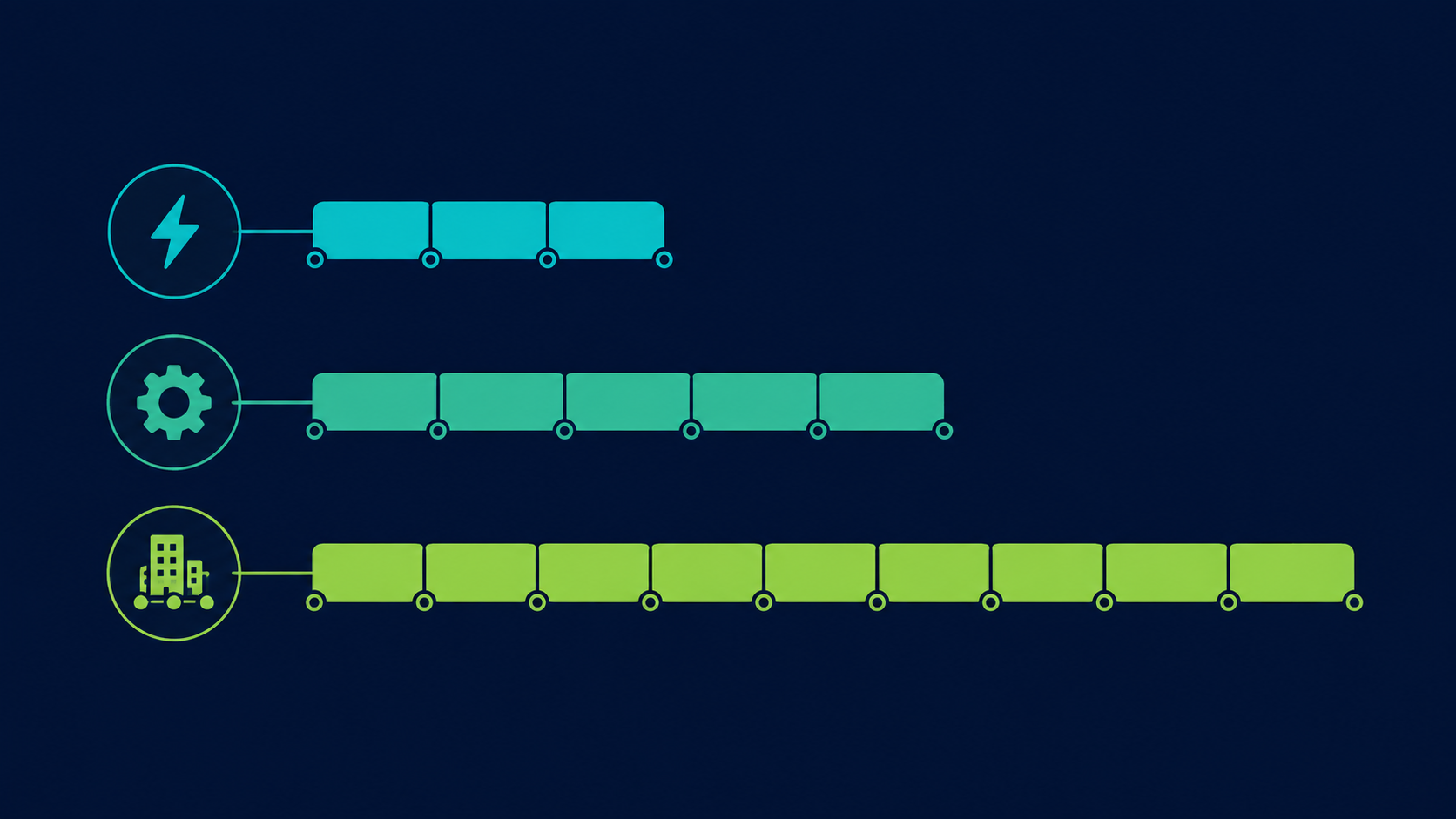
The Three Timelines That Actually Apply
A simple platform-built agent - one job, built on an existing agent platform rather than from scratch, one data source, a handful of integrations at most - is the fastest thing to ship. Think an FAQ handler, a basic appointment setter, a first-pass support triage bot. Two to four weeks is realistic, and most of that time goes to configuration and testing rather than engineering.
A custom mid-complexity agent is where most real production deployments live. This is a purpose-built agent - its own architecture, two to four system integrations, a proper retrieval pipeline if it needs to reason over your own data, and an actual evaluation process before it ships. Eight to sixteen weeks is the honest range here, and the width of that range depends almost entirely on how many systems it touches and how messy your underlying data is.
An enterprise multi-agent system - several coordinated agents, deep integration across core business systems, compliance and audit requirements, sometimes single sign-on and fine-tuned models - is a different scale of project. Four to nine months is typical, and teams that try to compress this meaningfully usually pay for it later in production incidents.
None of these numbers move much based on which model you use. They move based on scope, integration count, and how much testing the use case actually demands.
What Fills the Time, Phase by Phase
Every build, regardless of tier, moves through roughly the same stages - they just stretch or compress depending on scope.
Discovery and scoping usually takes one to three weeks and is, unglamorously, the phase that determines whether the rest of the timeline holds. Mapping the actual workflow, defining what "working" means in numbers rather than vibes, and inventorying every system the agent needs to touch - skip this and you don't save time, you just move the delay to a later, more expensive phase.
Architecture and design - deciding on single-agent versus multi-agent, picking the model, designing the tool interfaces and memory approach - generally takes one to two weeks. Quick, but consequential; a wrong call here shows up as rework in week eight, not week two.
Data and knowledge preparation, if the agent needs to retrieve from your own documents or systems, runs one to three weeks and is almost always the phase that runs long. Real company data is messier than anyone expects going in - duplicate records, outdated documents, inconsistent formatting - and cleaning it isn't optional if you want the agent to retrieve the right answer instead of a confident wrong one.
Core engineering - building the actual agent loop, wiring up tools, connecting to business systems - takes three to eight weeks depending on integration count. This is the most visible phase and, honestly, rarely the longest one anymore; modern agent frameworks have cut raw engineering time considerably compared to a couple of years ago.
Evaluation and tuning eats two to five weeks and is where a lot of unrealistic timelines fall apart. Getting an agent to handle the obvious cases well is fast. Getting it to handle the edge cases - the adversarial input, the ambiguous request, the thing a real customer will absolutely ask that nobody thought to test - takes real time, and it's the phase most tempting to shortcut under deadline pressure. Don't.
Launch and early monitoring typically runs one to two weeks of close, active watching before settling into normal operations - someone reviewing outputs daily, catching drift before it becomes a pattern.
Where Timelines Actually Slip
A handful of things reliably turn a planned 10-week project into a 16-week one.
- Waiting on system access. Requesting CRM API credentials in week five instead of week one is a small mistake that costs real calendar time - it should be one of the first things resolved, before engineering even starts.
- Scope creep mid-build. "While we're in there, can it also handle X?" sounds harmless and rarely is - a mid-evaluation addition typically costs several times what the same addition would have cost if it had been scoped at the start.
- Vague success criteria. "It should work well" isn't a target. Without a specific number - resolution rate, accuracy threshold, whatever's relevant - the evaluation phase has no natural finish line, and teams either ship too early or keep tuning indefinitely.
- Stakeholder bottlenecks. Review cycles that take a week to schedule, sign-offs that sit in someone's inbox - this is a genuinely underestimated source of delay on projects with more than two or three decision-makers.
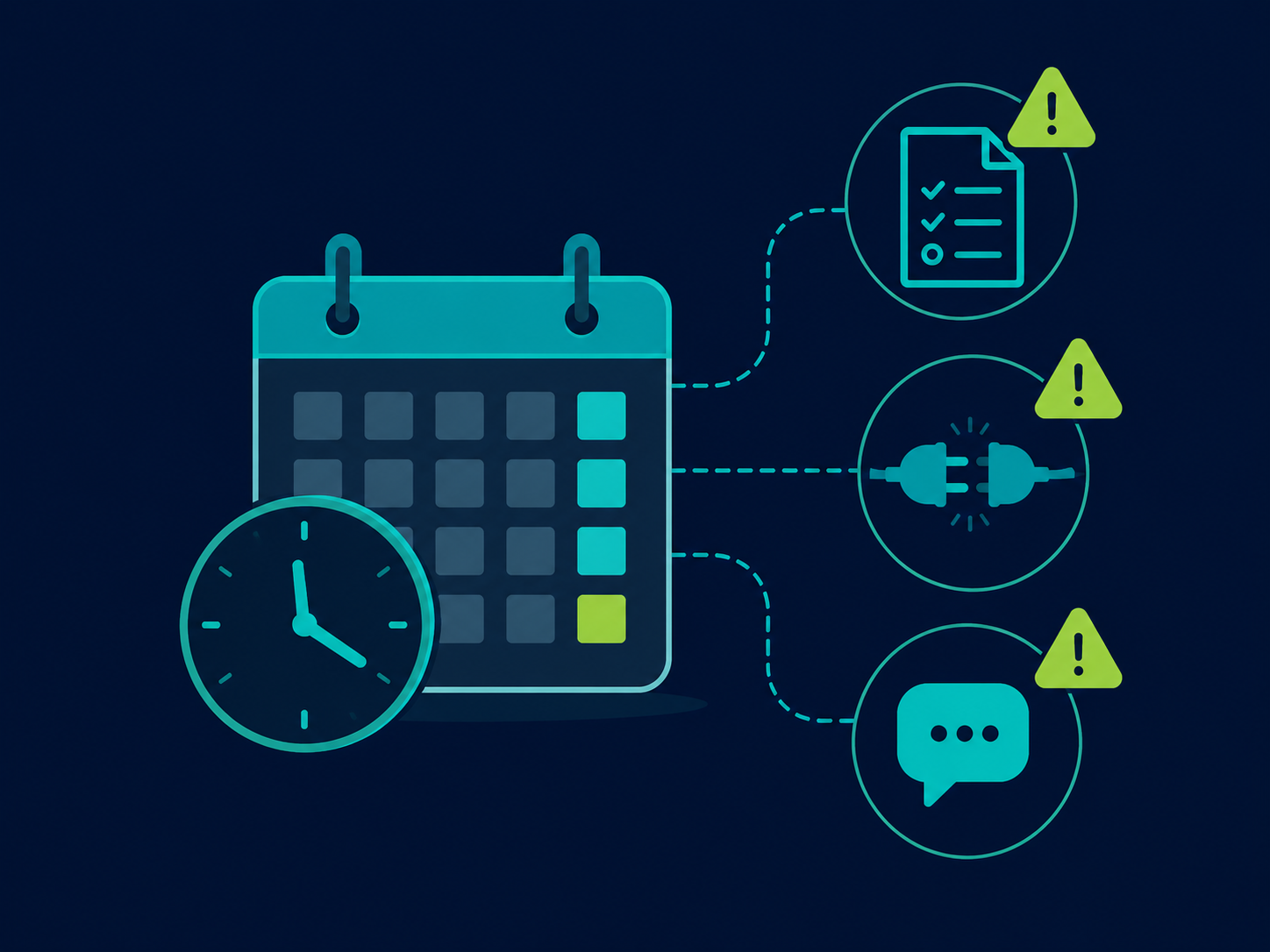
- Underestimating data cleanup. If the knowledge base the agent needs to pull from is out of date or inconsistent, someone has to fix that before the agent can be reliable, and that work has a habit of not being on anyone's plan until it blocks the whole project.
Can You Actually Compress the Timeline?
Some, without cutting corners that come back to bite you later.
Locking scope in writing at the end of discovery - with any change requiring a real conversation about timeline impact - kills a lot of the mid-build additions before they start. Making the framework and platform decision early rather than re-litigating it in week four saves real time. Running data prep and architecture work in parallel instead of strictly sequentially is an easy win most teams miss. And bringing senior engineering talent onto the harder integration problems tends to pay for itself - the gap between an experienced team and a less experienced one on integration work specifically is large enough to matter for the schedule, not just the invoice.
The one lever that moves the needle most for a company without existing in-house AI engineering capacity: don't wait to hire before you start the first project. A hiring process for AI engineering talent alone can eat months before a single line of the actual agent gets written - time an AI agent development company skips entirely, since the team and the process already exist.
In-House vs. Working With a Company: The Real Timeline Difference
This is where the honest comparison usually surprises people who haven't priced it out.
Hiring an AI engineer from scratch, then building, realistically stretches into most of a year once you count the hiring window and ramp-up time - and that's before anything ships. An existing in-house team with real agent experience can hit the same 8-to-16-week range as an outside partner, but only if that experience genuinely exists already; a team that's new to agent development tends to add several weeks learning the same lessons a specialized team has already been through.
Working with an established AI agent development company generally lands at the mid-complexity range - 8 to 16 weeks - without the hiring gap, because the team, the frameworks, and the evaluation process are already in place on day one. The trade-off worth knowing about going in: you want clear terms on IP ownership and knowledge transfer up front, so the agent and its logic are genuinely yours at the end of the engagement, not something you're dependent on the vendor to touch.
Toadster scopes every build the same way - discovery before a single line of the timeline gets promised, because "how long will it take" only has an honest answer once the workflow's actually mapped. Our page on how we work as an AI agent development company covers the process behind that number, and the cost breakdown on our blog covers the other half of the planning conversation most people want before they commit to either number.
The Timeline Question Behind the Timeline Question
Most people asking "how long will this take" are really asking "when do I stop looking foolish for not having this yet" - and the honest answer is that the fastest path to a working agent is almost always a narrower scope, not a faster team. A well-scoped 10-week project beats a rushed 6-week one that needs a rebuild by month four.
If you want a real timeline for your specific use case rather than a range, talk to Toadster - scoping the actual workflow takes about thirty minutes and gets you a number you can plan around.