
AI Agent ROI: What Companies Actually Get Back
Everyone wants the ROI number before they'll approve the budget. Fair enough - but if you ask ten companies that deployed an AI agent last year what it actually returned, you'll get ten different answers, and most of them will be somewhere between "we're still figuring out how to measure it" and a number that's been rounded up to sound better in a board deck.
That's not because AI agent ROI is fake. It's because most companies never define what they're measuring before the agent ships, and by the time someone asks for the number, nobody agreed on what counts.
Where the Return Actually Comes From
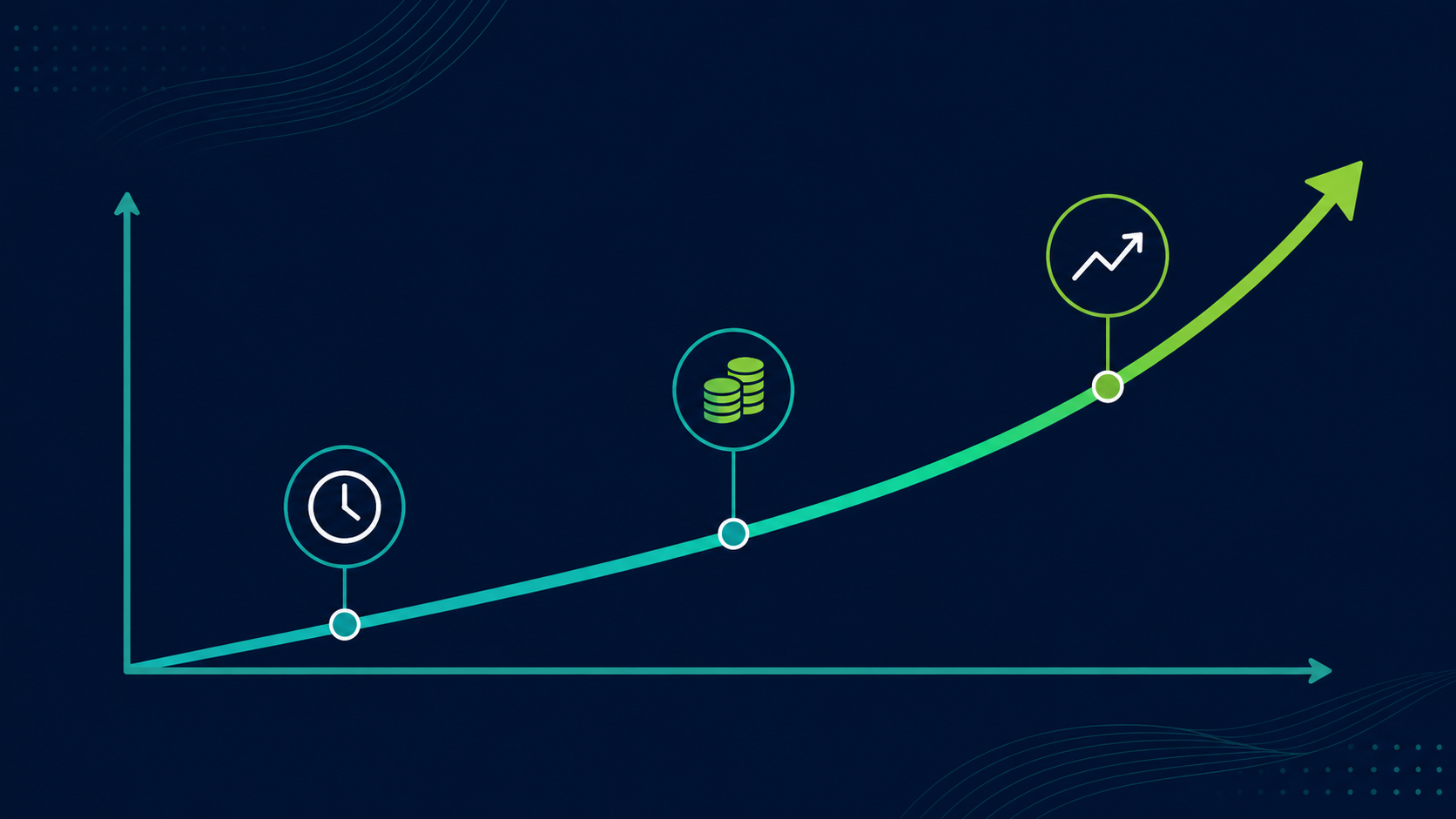
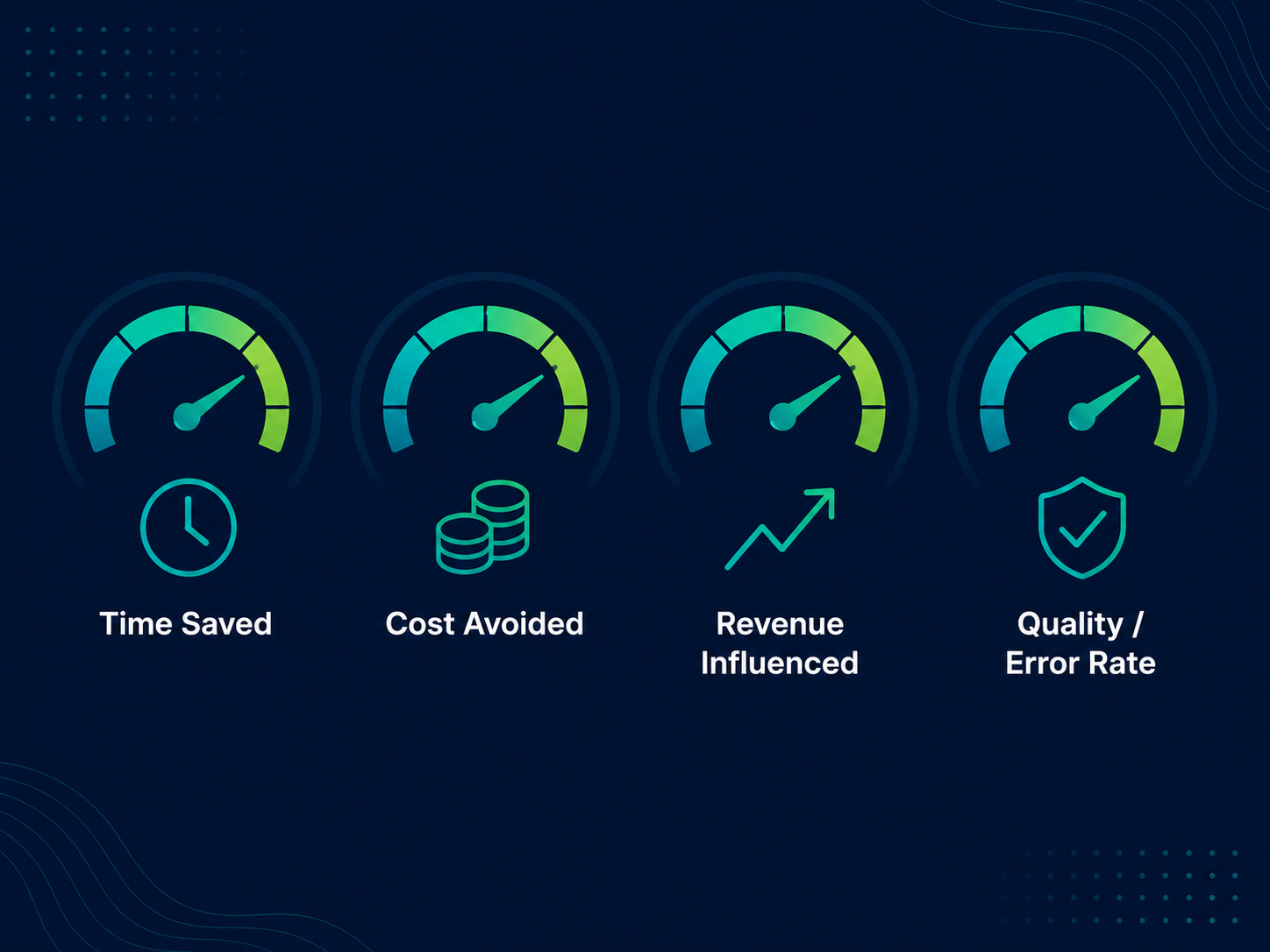
Time saved on a specific, repeatable task is the most common and the easiest to measure honestly. If a support triage agent cuts the average handling time on a ticket category from twelve minutes to three, that's a real number you can multiply by ticket volume - no modeling required, just before-and-after data on the same task. This is usually the first ROI signal to appear, often within the first few weeks of production use.
Cost avoided is related but distinct - it's the hire you didn't need to make, or the overtime you didn't have to pay, because the agent absorbed volume growth that would otherwise have required more people. This one's easy to overstate (nobody actually knows for certain they'd have hired that person) and easy to understate (teams forget to count the recruiting and ramp-up cost of the hire they avoided). Be honest about the counterfactual.
Revenue influence is the hardest to prove cleanly and the one most companies reach for first anyway. An agent that responds to a sales inquiry in ninety seconds instead of four hours plausibly converts better - but proving that requires a controlled comparison, not just "conversions went up after we launched it," since a dozen other things could explain that same month's numbers. If you want this category to hold up, you need an actual before/after or A/B structure, not a coincidence.
Error reduction matters most in workflows where a mistake is genuinely expensive - a misfiled compliance document, a wrong refund amount, an incorrectly routed prescription request. An agent that's more consistent than a tired human doing the same task at 4pm on a Friday has real value here, even if it never shows up as a clean dollar figure. This one's worth tracking even when you can't fully price it.
Most agents deliver real value in two of these categories and only partial value in a third. An agent claiming strong ROI across all four in its first quarter is either unusually well-scoped or, more often, not being measured very carefully.
How to Actually Measure It
The honest version of ROI measurement starts before the agent ships, not after.
- Pick the metric before you build, not after. If nobody wrote down "average handling time" or "resolution rate" as the target before launch, whatever number gets reported later is being fit to look good, not measured against a plan.
- Get a real baseline. You need the actual pre-agent number for the same task, measured the same way - not a guess, not an industry benchmark, your own historical data.
- Separate the agent's effect from everything else changing at the same time. If volume, staffing, or pricing changed in the same quarter the agent launched, isolate the comparison as best you can or be honest that the number is directional, not precise.
- Track a maintenance cost line, not just a build cost line. ROI that ignores ongoing model usage, monitoring, and the occasional retuning isn't real ROI - it's a first-quarter number that gets worse every quarter after.
- Give it enough time. Some categories, like error reduction on a low-frequency workflow, need months of data before the number means anything. Reporting ROI after two weeks is usually reporting noise.
Why the Timeline for ROI Isn't the Same as the Timeline for Launch
An agent going live is not the same milestone as an agent paying for itself, and conflating the two is where a lot of ROI conversations go sideways.
A narrow, well-scoped agent handling a high-volume task can show real time-saved numbers within its first month - the task is repeated often enough that the sample size arrives fast. A more complex agent handling a lower-frequency but higher-stakes workflow might take a full quarter before there's enough data to say anything with confidence, even if it's working exactly as intended from day one.
This is also where scope matters more than almost anything else discussed earlier in a project. An agent that tries to do too much too early usually delays every one of these numbers, because it takes longer to reach the volume and stability needed to measure any of them cleanly. Narrow first, then expand once the first number is real.
Why the Development Approach Affects the Return, Not Just the Build
This is the part that connects back to who builds the thing in the first place.
An agent that ships without a real evaluation process baked in tends to produce ROI numbers that look great for a month and then quietly erode - drift nobody caught, edge cases nobody tested, a slow decline that doesn't show up until someone actually goes looking. This is less a build-quality issue and more a process issue: whoever builds the agent needs to have planned for measurement and maintenance from the start, not bolted it on after launch became a line item on a slide.
This is where working with an AI agent development team like Toadster tends to change the shape of the ROI curve, not just the speed of getting there - the evaluation harness and monitoring that make a number trustworthy six months out are part of the build from the beginning, not an afterthought added when someone finally asks for the number. If you want to see how that approach translates into actual delivered systems, our case studies walk through a few of them. And if you're earlier in the process, our pages on what agentic AI development actually involves, what it costs, and how long it takes cover the rest of the planning conversation.
The Number That Actually Matters
The real test of AI agent ROI isn't the number in the first board deck after launch - it's whether that number still holds up in month six, after the initial novelty and manual double-checking wear off and the agent is just quietly doing the job. Agents built with real evaluation and monitoring from day one tend to pass that test. Agents built to hit a launch date usually don't.
If you're trying to figure out what realistic ROI looks like for your specific use case before committing budget, talk to Toadster - we'll walk through the actual numbers your workflow would need to hit, not a generic range.