
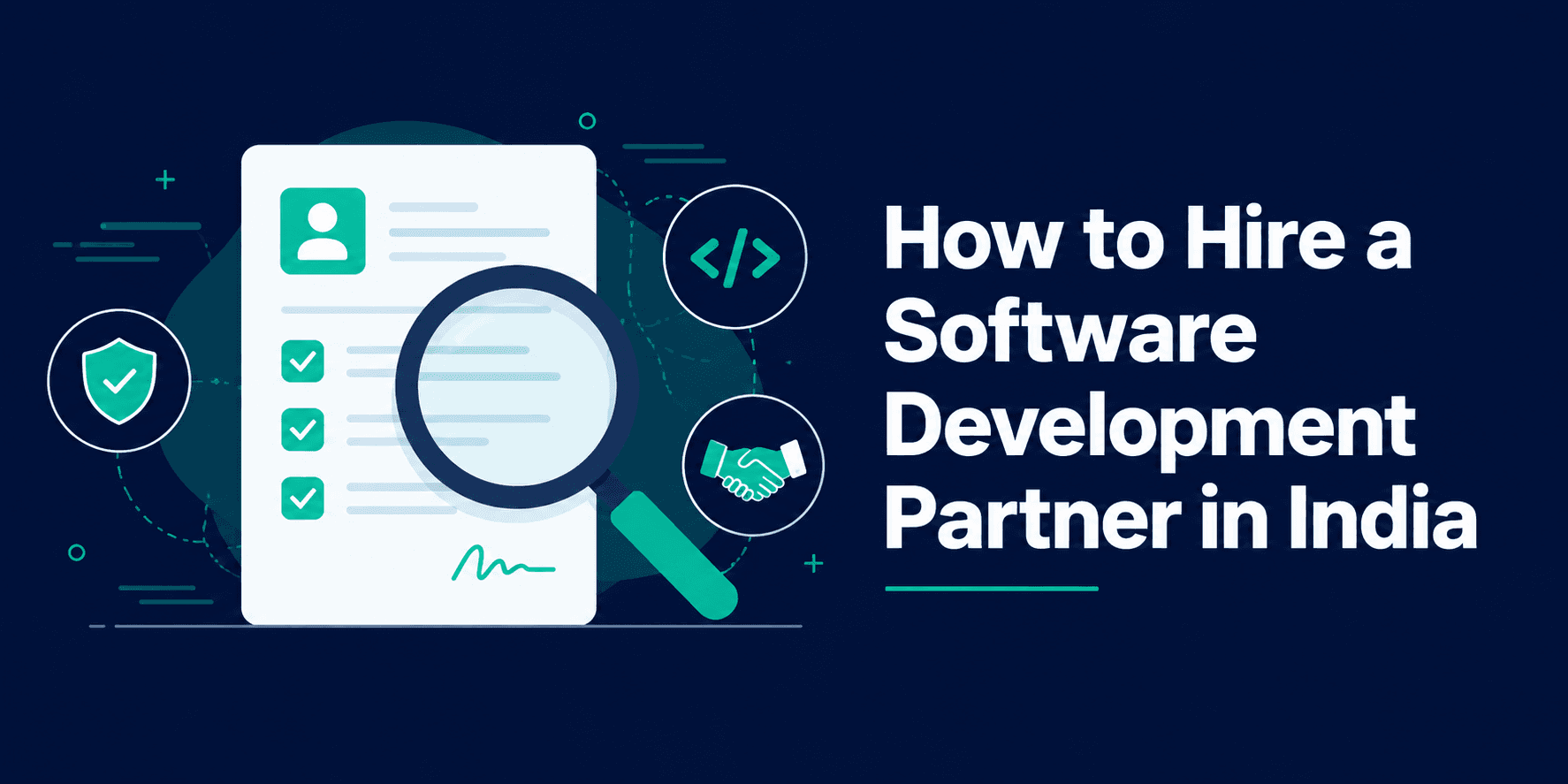
How to Hire a Software Development Partner in India
Every software development company you talk to will tell you they're experienced, reliable, and client-focused. That's not information - it's the entry fee to be in the conversation at all. The real differences that predict whether a project succeeds or quietly falls apart in month three show up somewhere else entirely: in how a vendor handles the moment things get hard, not in how they pitch when things are easy.
This is written for anyone about to hire a software development company in Noida or anywhere else in India - a founder building a first product, an operations lead modernizing a legacy system, or a company that's already been burned once by a vendor whose demo looked great and whose production build didn't hold up.
The One Filter That Actually Matters
Ask a vendor this, and watch how they answer: "Show me a system you built that's currently running in production, under real usage - not a demo, not a prototype."
Most companies will pivot to a portfolio slide instead. A portfolio slide shows what a team can build. It says nothing about what happens when that system hits real traffic, real edge cases, and real users doing things nobody anticipated. Building something that works in a demo is genuinely a different skill than building something that survives production - and a lot of the vendor landscape has only ever done the first one.
If a company can point to something live, working, and currently handling real usage - ideally something you can actually use or inspect yourself - that's a meaningfully stronger signal than any case study deck.
What to Actually Vet, Beyond the Portfolio
Production experience, not just delivery experience. Shipping something is the easy half. Ask what happens when it breaks: do they have an incident postmortem they can show you (redacted is fine)? Who's actually on call when something goes wrong outside business hours? A team that's never had to answer that question hasn't operated anything under real pressure yet.
IP ownership and lock-in, spelled out before you sign. This is the one buyers regret skipping most. Ask directly: do you own 100% of the source code, including any internal frameworks or libraries used to build it? Whose cloud account does production actually run in - yours, or theirs? If the relationship ends, what do you actually walk away with? The honest answer should be: full ownership, your infrastructure, no proprietary lock-in. Anything vaguer than that is worth pushing on before you commit budget.
Contract structure that doesn't punish either side. Pure hourly billing rewards slow delivery. Pure fixed-bid rewards scope-cutting once margins get tight. The healthier middle ground is milestone-based delivery with clear, written acceptance criteria per phase - both sides know what "done" means before work starts, not after a dispute.
Domain fluency in your specific vertical. A team that's built for healthcare isn't automatically ready for fintech, and a logistics platform has almost nothing in common with an e-commerce storefront under the hood. Ask about the specific edge cases your industry produces - compliance requirements, data sensitivity, regulatory quirks - and listen for whether the answer sounds like real experience or a generic explanation of what any team "would" do.
AI capability that's real, not a thin wrapper. Nearly every development company now claims AI capability, and most of it is a single API call bolted onto a form. If AI is part of your roadmap, ask specifically how they evaluate a system's accuracy, what happens when it's wrong, and whether there's a human-review layer for anything consequential. Enthusiasm about AI is common. Evidence of having actually shipped and monitored it in production is not.
The Vetting Questions That Actually Work
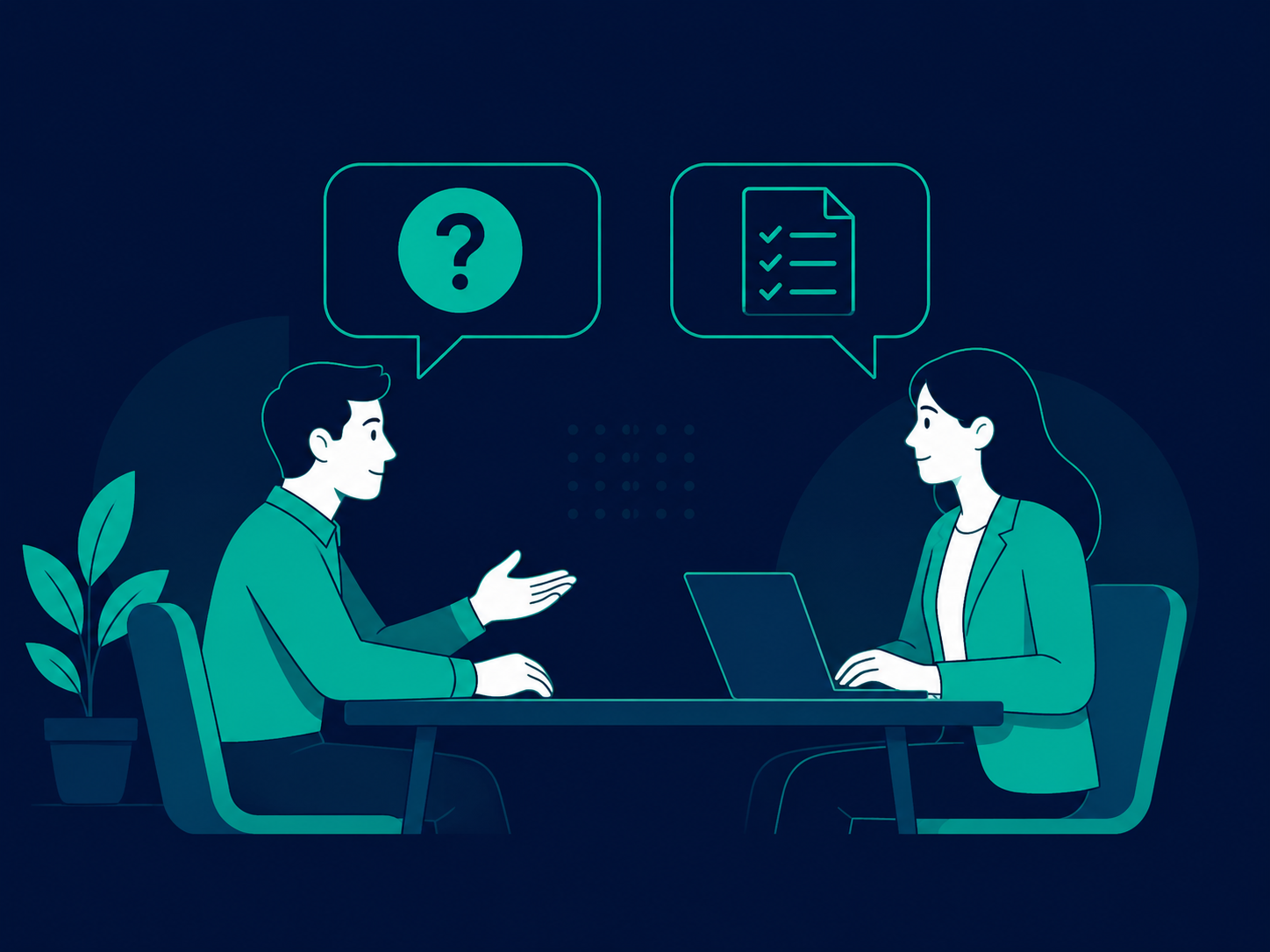
A handful of direct questions do more work than a formal RFP process:
- "Can I speak to two of your past clients - ones I pick, not ones you select for me?"
- "Can I see a real code repository from a past project, with the client's permission - commit history, review process, test coverage?"
- "What would a two-week paid discovery phase look like, before we commit to a full build?"
- "If I terminate this contract early, what exactly do I walk away with?"
A vendor confident in their own work answers these plainly. Hesitation, vagueness, or a pivot back to the sales deck is itself useful information.
Why Location Matters Less Than People Assume
There's a common instinct to default to the most well-known tech hub as a proxy for quality. It's not a reliable one. Strong engineering teams exist across India's tech ecosystem, including hubs that don't get the same brand recognition as the biggest metros - and plenty of well-marketed teams in famous cities have thin production experience underneath the pitch. Judge the specific team, their references, and their actual shipped work. Treat the city as a convenience factor, not a quality signal.
Noida in particular has quietly built a real base of both established IT delivery and newer AI-native development work - worth knowing if location and time-zone-adjacent collaboration matter to your project, though it shouldn't be the deciding factor on its own.
Where Toadster Fits In
Toadster is a software development company in Noida working across both custom software builds and AI-native systems - which matters mainly for buyers who want in-person collaboration or regional context, not as a substitute for vetting the actual team and process. The same standards in this article apply to us as much as anyone else: full source code ownership on completion, your own infrastructure rather than vendor lock-in, and milestone-based delivery with real acceptance criteria, not vague scoping.
If AI is part of what you're building, our page on AI development company in Noida covers the compliance and architecture side specifically. For the broader software build, our software development team covers custom platforms, web applications, and enterprise systems - worth a look if any of the criteria above are part of what you're currently vetting for.
The Real Test
Every vendor sounds credible in a sales call. The ones actually worth hiring are the ones willing to put ownership terms, delivery structure, and real production evidence on the table before you've signed anything - because that's the version of "trust us" that costs them something if it turns out not to be true.
If you want to talk through what your specific project would need, talk to Toadster - a real scoping conversation, not a generic pitch.