
Data Engineering

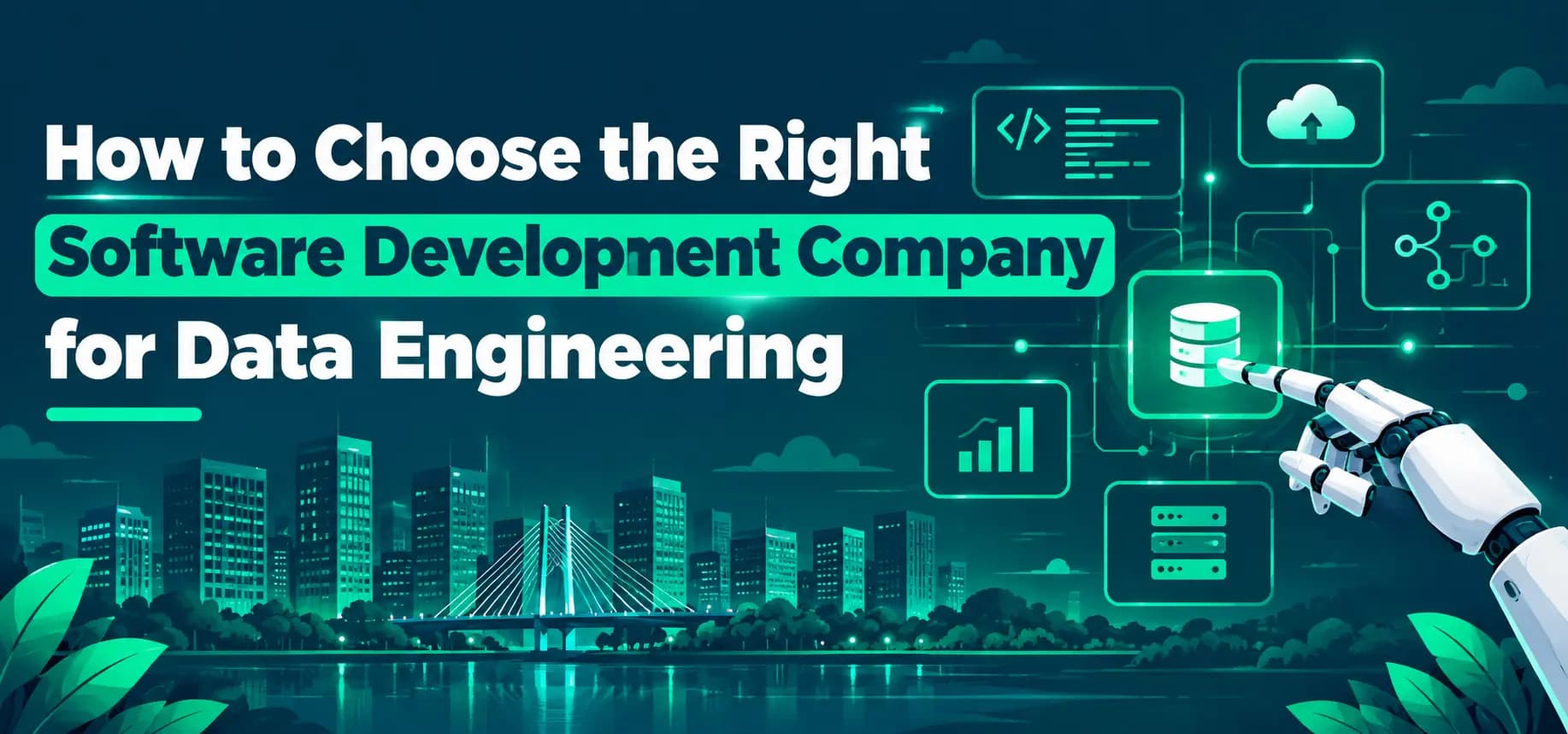
How to Choose the Right Software Development Company for Data Engineering

Data Engineering Services: how to choose the right software development partner for your business - what real expertise looks like, what to ask, and what to avoid.

Toadsters Team

Data Engineering Insights

June 1, 2026
8 min read
Share:
How to Choose the Right Software Development Company for Data Engineering
Data Engineering

What is data engineering, and why should you care about it?

Here's the simplest way to put it: data engineering is the work that happens before anyone can do anything useful with data. Someone has to pull it from source systems, clean it, transform it into something consistent, and land it somewhere it can actually be queried. That someone - or that team - is doing data engineering, whether they call it that or not. The reason this matters when you're hiring is that a lot of software companies will tell you they do it. Fewer of them genuinely do.

Why does the wrong hire hurt more than it looks like upfront?

It rarely falls apart immediately. The first few weeks feel fine. Pipelines run. Dashboards populate. Then three months in, something starts behaving oddly - numbers that don't match, jobs that fail silently, latency that creeps up without explanation. By that point, the original team may be gone or mid-contract on something else. You're left debugging architecture you didn't build, in code you didn't write, for a system your internal team was never trained to maintain. The real cost isn't the rebuild. It's the decisions your business made on unreliable data while you were waiting to notice the problem.
How to choose the right software development company for data engineering

What should a capable data engineering company actually know how to do?

There's a meaningful gap between a team that's touched data work and one that's actually built production-grade systems. When you're evaluating, look for depth across these areas - not just name-drops: - Pipeline architecture - Can they explain the tradeoffs between batch and streaming, and when each makes sense for your situation? - Cloud platforms - Hands-on experience with AWS, Azure, or GCP matters more than certifications. Ask what they've built, not what they've passed. - Warehouse decisions - Snowflake, Databricks, BigQuery - each suits a different type of workload. A good team has an opinion and can defend it. - Orchestration - Airflow is common; it's not always the right call. Ask how they manage dependencies and what happens when a job fails halfway through. - Governance - This one gets skipped constantly. If they don't bring up data lineage, access controls, or audit logging before you do, that's worth noting.

What questions are actually worth asking before you hire?

Skip the generic "tell me about your process" opener. These get more useful answers: - Tell me about a pipeline you built that broke in production - what caused it, and what did you change? - How do you deal with a source system that changes its schema without telling anyone? - Once a pipeline is live, how do you catch data quality issues before users do? - When the project ends, what exactly gets handed over - and in what shape? The value isn't in the answers themselves. It's in whether the answers come from memory or from a script. > "Every experienced team has a story about something that broke badly. If they don't, they either haven't done much real work or they're not being straight with you."

What should make you uncomfortable during the evaluation?

A few things that consistently show up with teams that underdeliver: - They talk about tools before they've asked about your data volumes or business context - Their portfolio is full of dashboards but light on architecture - Nobody on the team has a clear answer on idempotency - the ability to re-run a pipeline without creating duplicate or corrupted records - Data governance gets treated as a compliance afterthought rather than a design consideration - When you ask about a project that went wrong, the answer is suspiciously clean Every experienced team has a story about something that broke badly. If they don't, they either haven't done much real work or they're not being straight with you.

How does good data infrastructure actually change things over time?

It's not always visible in the first quarter. What you tend to notice is that things stop being slow in ways they used to be slow. Your analysts aren't spending half their week cleaning exports before they can do anything with them. Your data scientists are working from reliable, well-structured inputs instead of negotiating with raw files. Reports stop contradicting each other. That's what well-built data engineering infrastructure does at scale - it removes friction that people had started to assume was just part of the job.

What should you confirm before you sign anything?

A few things that are easy to overlook until they become problems: - They've worked in your specific cloud environment, not just adjacent to it - Their past projects involved data complexity close to yours - volume, variety, real-time requirements - The code, documentation, and credentials belong to you when the engagement ends - There's a defined process for production incidents, not just a general commitment to "support" - Knowledge transfer is written into the contract - not something they'll get to eventually The right partner makes your team more capable over time. If the relationship is structured so that you always need them, that's not a partnership - it's a dependency. The companies that build this well don't just solve the immediate problem. They make the next five problems cheaper, faster, and less painful to deal with.
Data EngineeringSoftware Development CompanyData PipelinesCloud DataData Governance

Toadsters Team

Data Engineering Insights

Frequently asked Questions

Quick answers to common questions about this topic.

Ask for a real architecture diagram from a past project and walk through it with them. Then ask what broke and why. Anyone who's done serious data work has specific answers to both. Vague ones are a sign they've sold more than they've shipped.

A properly scoped pipeline build - cloud infrastructure, integrations, basic monitoring - typically runs between $30,000 and $150,000. That range shifts based on how many source systems you have, whether you need real-time processing, and how much governance scaffolding is required. Ongoing maintenance usually adds 15–25% of the build cost annually.

A focused build with a clear scope can reach production in 4–8 weeks. If you're dealing with multiple source systems, streaming requirements, or enterprise governance needs, realistic stability is closer to 3–6 months - and any team quoting faster without knowing your environment is guessing.

Ready to transform your business with AI?

Explore how Toadster can help you harness the power of artificial intelligence to drive growth, efficiency, and innovation.

How to Choose the Right Data Engineering