

Software and AI for Energy Enterprises
We build custom software and AI solutions for utilities, renewable energy companies, power producers, energy retailers, and oil & gas operators.
Talk to an Expert
At a Glance: Why This Matters Now
is currently spent on power grids worldwide, which the IEA says is not keeping pace with generation and electrification.
was projected for solar PV investment in 2025, the largest single item in global energy investment.
Africa receives about 2% of global clean energy investment while home to about 20% of the world's population.
Energy Software Development & AI Solutions
Generative AI
Maintenance report and work-order summarisation, regulatory and ESG report drafting, and field-technician assistants that answer questions from equipment manuals and past incident logs.
Field intelligence and automated regulatory drafting
FOCUS AREAS
Agentic AI
Agents that triage outage tickets, validate smart-meter exceptions, and schedule maintenance work orders within defined safety and approval guardrails.
Automated outage triage & dispatch within safety guardrails
FOCUS AREAS
AI Automation
Automate meter-read validation, billing exception classification, and SCADA alarm categorisation so operators focus on genuine faults.
Intelligent alarm filtering & meter exception processing
FOCUS AREAS
Custom Software
Outage management tools, distributed energy resource (DER) dashboards, load-forecasting applications, and internal asset-performance platforms.
Dedicated DER, OMS, and asset-performance tools
FOCUS AREAS
Enterprise Dev
Architected for high availability, audit logging, and integration with SCADA, historians, GIS, and ERP systems.
Secure OT/IT boundary integration & high availability
FOCUS AREAS
Cloud Platforms
Cloud-native and hybrid applications with edge processing for IoT sensor data and secure OT/IT network boundaries.
Hybrid cloud & edge processing for high-volume telemetry
FOCUS AREAS
How We Approach Energy Projects: Reference Solution Designs
These are reference designs that show how we scope and build, not client results. Targets are agreed with you during discovery.
Asset-Health Anomaly Detection
| Element | Design |
|---|---|
| Inputs | Sensor time series (temperature, vibration, load), maintenance history, asset register |
| Method | Per-asset baseline models flag drift from normal behaviour before failure patterns develop |
| Human Control | Engineers review every alert and set thresholds; nothing writes back to control systems |
| Output | Ranked asset watch-list with the signals behind each flag |
| What to Measure | Unplanned downtime, false-alert rate, lead time between flag and fault |
Meter Exception Resolution Agent
| Element | Design |
|---|---|
| Inputs | Smart-meter reads, tariff data, customer account records, past exception tickets |
| Method | Rules plus a classifier validate reads, categorise exceptions and draft corrections |
| Human Control | Billing staff approve corrections above a defined value or risk level |
| Output | Cleared exceptions, drafted corrections and a full audit trail |
| What to Measure | Exception backlog, estimated-bill rate, time to resolve a query |
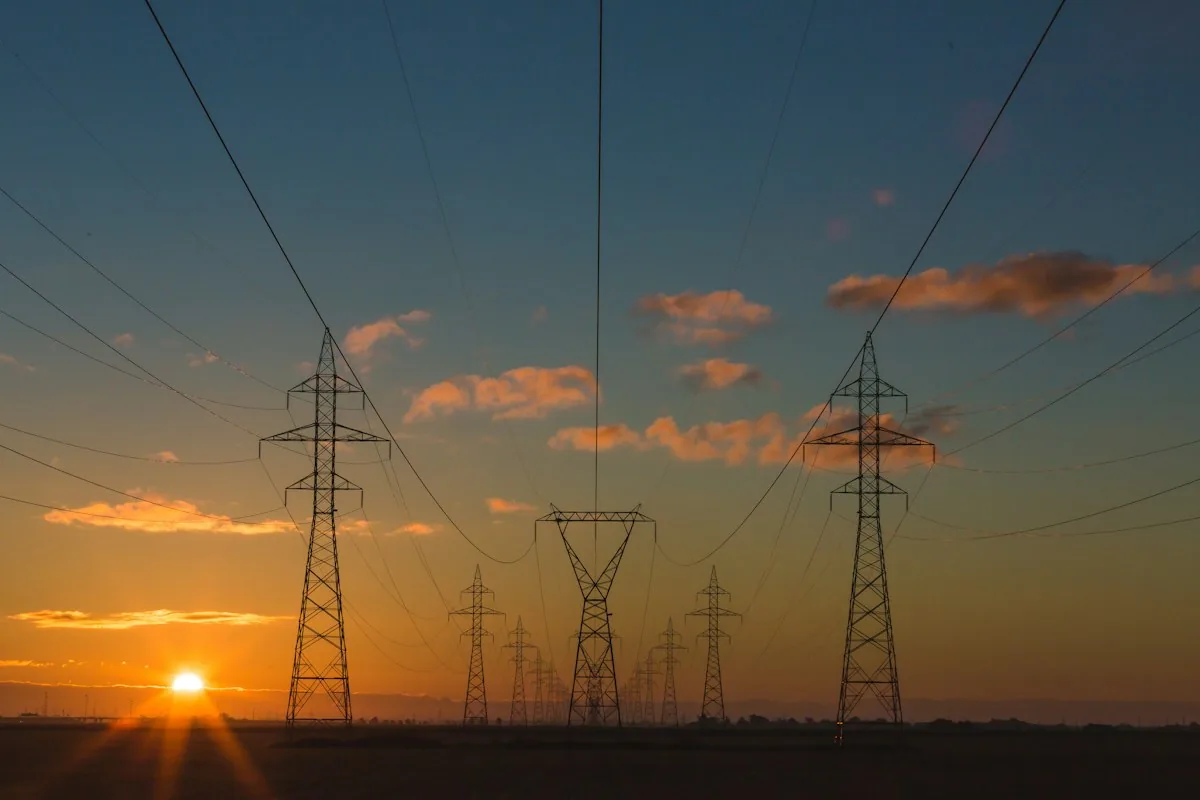
Diagram of sensor data flowing into asset-health anomaly detection for utilities
Build, Buy, or Hybrid for Energy Software
| Approach | Best When | Watch Out For |
|---|---|---|
| Buy Off-the-Shelf | Standard billing, GIS or CRM functions | Limited fit to your network, tariffs and market rules |
| Build Custom | Asset-health models on your sensor history, proprietary forecasting, bespoke operator tools | Needs clean historian and asset data first |
| Hybrid (Integrate + Custom Layer) | Outage, metering or DER workflows that span several vendor systems | Interface ownership and security boundaries must be agreed up front |
How a Project Runs, Step by Step
- 01Phase 1
Discovery Call
We map your goals, systems, data and constraints, and tell you honestly what is and isn't worth building.
- 02Phase 2
Architecture & Data Review
We review source systems and data quality, agree integration points, security boundaries and where humans stay in control.
- 03Phase 3
MVP Build
We ship the smallest version that proves value on real data, then iterate with your feedback.
- 04Phase 4
Pilot with Human Review
The solution runs alongside your team, with logging and review of every automated decision.
- 05Phase 5
Production Hardening
Monitoring, access control, performance and security testing before wider rollout.
- 06Phase 6
Support & Scaling
Ongoing optimisation, new use cases and handover documentation, with no lock-in.
Global Expertise
How we adapt energy software to the markets we focus on.
Energy Software Development in South Africa
South African utilities, municipalities and private generators face supply-reliability pressure and a growing independent power market. We design for NERSA-regulated environments and for POPIA-compliant customer and meter data. Context: the IEA notes Africa attracts only about 2% of global clean energy investment, which raises the value of getting each grid and generation asset to perform.
Energy Software Development in Australia
The National Electricity Market, operated with AEMO, is shaped by rooftop solar, batteries and distribution-network demands. We build with the Privacy Act and the ASD Essential Eight security practices in mind.
Energy Software Development in the UAE and Saudi Arabia
Utility-scale solar, grid modernisation and national transition programmes, including the UAE Net Zero 2050 initiative and Saudi Vision 2030, drive demand for forecasting, monitoring and asset-management platforms. We support Arabic and English interfaces and deployment in the region your data rules require, aligned with each country's personal data protection law.
USA, Canada and UK
Support for grid reliability reporting, GDPR and state or provincial privacy requirements, and integration with existing SCADA and AMI vendors.
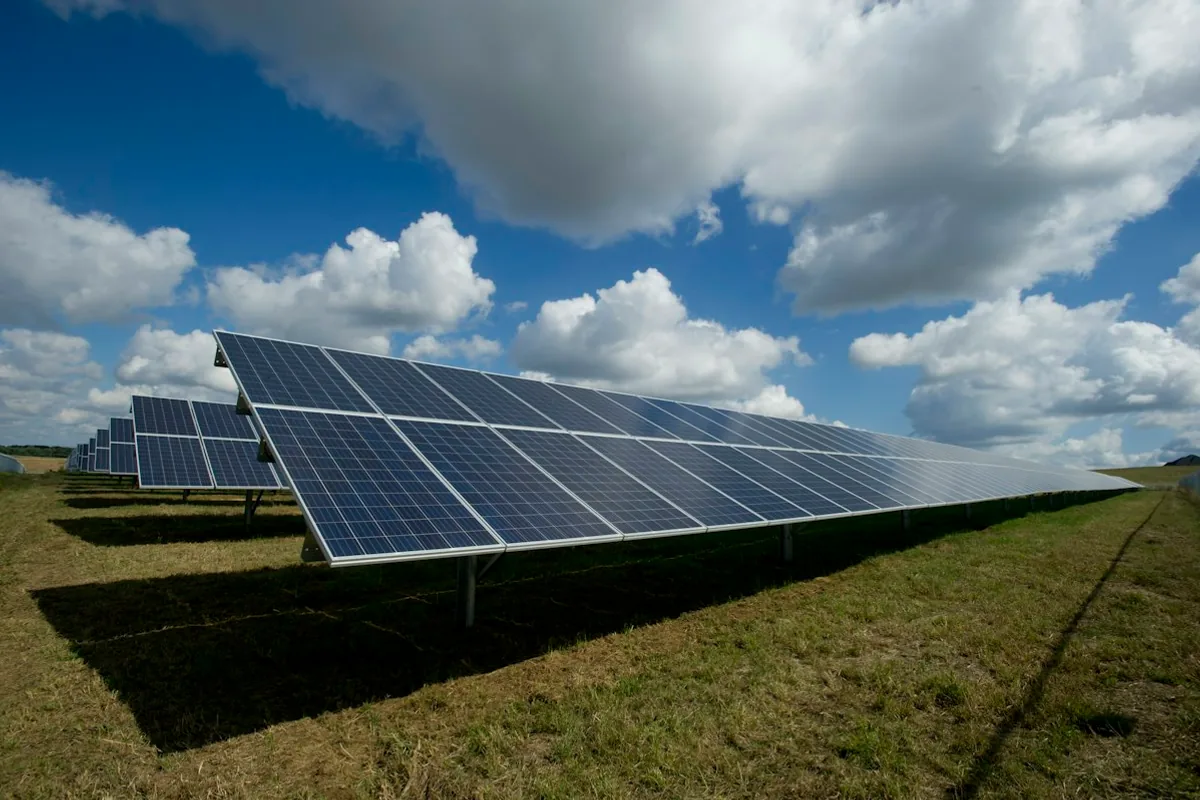
Solar farm output forecast chart used in renewable energy software
Cost Reduction
Predictive maintenance and automated meter-exception handling reduce emergency repair spend and manual back-office effort.
Revenue Growth
Better forecasting and faster billing correction improve revenue capture and support new services such as demand response and EV charging.
Productivity
Agentic triage and AI assistants return engineer and control-room time for higher-value planning work.
Risk Reduction
Structured audit logging, segmented OT/IT architecture, and explainable models reduce reliability and compliance exposure.
Frequently Asked Questions
Common questions about energy software, AI, and integration.
It builds custom applications, integrations, and AI systems for utilities, renewable operators, and energy retailers, covering grid monitoring, metering, asset management, forecasting, and billing, built to handle real-time operational data and reliability requirements.
Models learn normal sensor behaviour for each asset and flag drift that precedes failure, letting teams schedule repairs before an outage instead of after one.
Agentic AI is generally deployed for administrative and analytical tasks such as ticket triage, meter exceptions, and work-order scheduling, with human approval and hard guardrails for anything that affects switching, dispatch, or safety.
OT data comes from operational systems like SCADA and sensors, while IT data comes from systems such as ERP, billing, and CRM. Value comes from connecting both without exposing control networks.
A focused use case such as outage dashboards or meter validation typically takes a few months from discovery to go-live, while broader grid modernisation programmes take considerably longer.
Requirements vary by country but commonly include grid reliability reporting, critical-infrastructure cybersecurity standards, data-protection laws, and emissions or ESG disclosure rules.
Yes. Models combining weather data, historical output, and asset condition improve solar and wind forecasts, supporting better balancing and trading decisions, though accuracy depends on data quality and site conditions.
Generative AI produces content such as maintenance summaries and compliance drafts. Agentic AI takes multi-step actions such as validating meter exceptions or scheduling work orders, often using generative AI as one step.
Predictive models combine consumption history, weather, calendar effects, and local events to forecast load, helping utilities plan generation, purchasing, and network capacity.
It depends on the use case, but common components include time-series databases, streaming pipelines for sensor and meter data, PostgreSQL for asset and billing records, vector databases like Qdrant for search over manuals and incident reports, and cloud or hybrid infrastructure with edge processing.
Commodity functions such as standard billing or GIS are usually better bought, while workflows specific to your network, asset mix, or market rules typically justify custom development or deep integration.
It supports drone and camera inspection of lines, solar panels, and wind turbines, detecting damage or hotspots as decision support for engineers.
ROI typically shows up as fewer unplanned outages, lower emergency maintenance cost, reduced billing exceptions, and faster reporting cycles.
We use read-only data connectors and an integration layer between OT and IT networks, so models consume operational data without writing back to control systems or requiring a rip-and-replace.
A virtual power plant aggregates distributed assets such as rooftop solar, batteries, and EVs into one controllable resource, requiring device integration, forecasting, and market or grid-operator interfaces.
Through network segmentation between OT and IT, encryption, role-based access, audit logging, and secure development practices aligned to the relevant critical-infrastructure standards.
Yes. We design for local grid structures, market rules, and data-protection requirements such as POPIA in South Africa and the Privacy Act in Australia, with regional hosting options.
By validating smart-meter reads automatically, flagging anomalies early, and routing exceptions to staff with suggested corrections.
Well-scoped pilots such as asset anomaly detection or meter validation often reach production within a few months, while multi-site or multi-system rollouts take longer due to integration and validation.
Look for experience with SCADA, historian, and AMI data, a clear approach to OT/IT security, regional compliance awareness, and a delivery process that includes operations and engineering stakeholders. ---
Start Your Technical Consultation
Skip the vendor pitch. Bring your existing systems, grid or asset constraints, and requirements. We'll give you an honest read on what's achievable.