
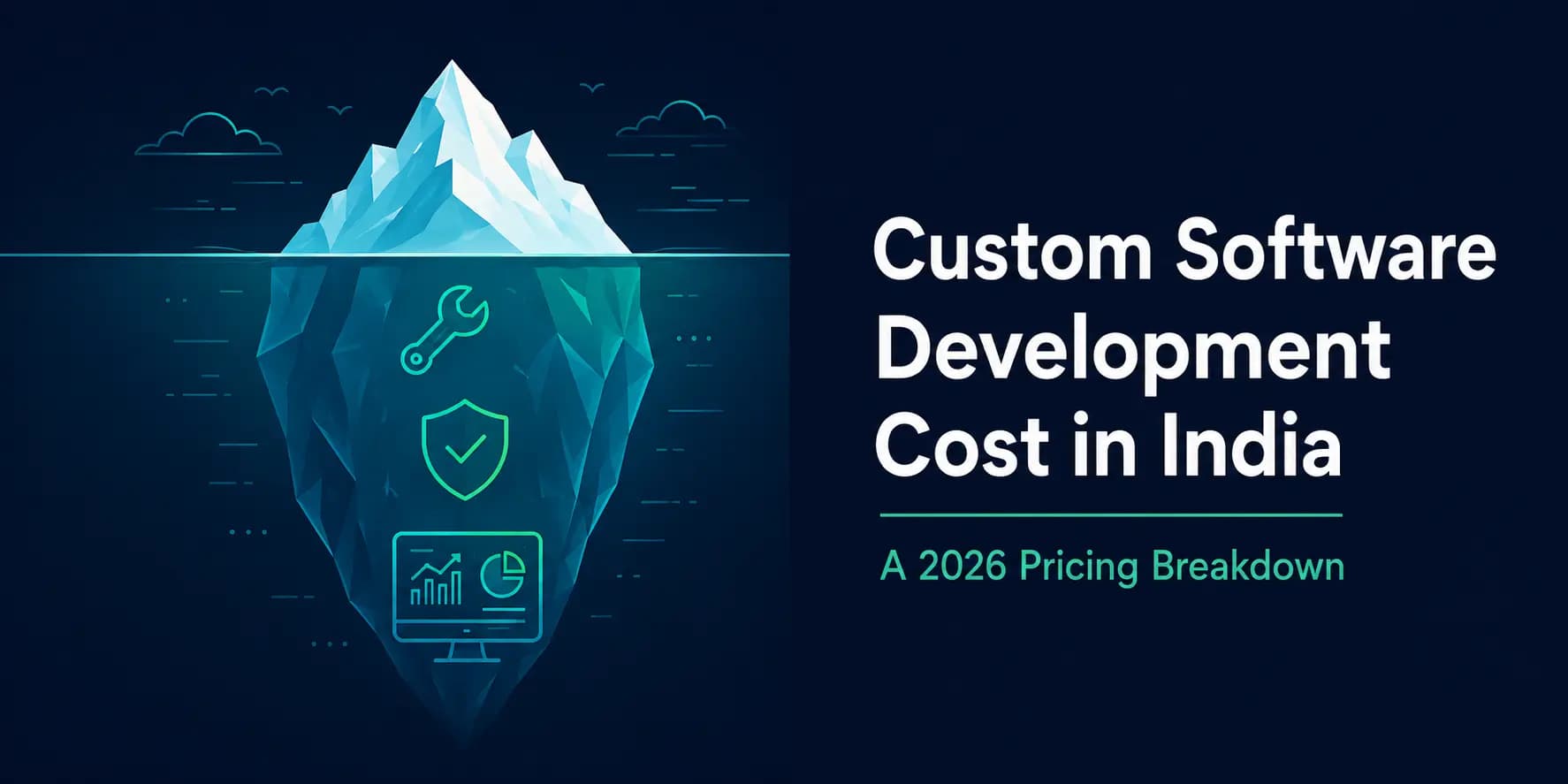
Custom Software Development Cost in India: A 2026 Pricing Breakdown
Ask what custom software costs in India and you'll find a number for almost every budget - ₹2 lakh here, ₹80 lakh there, a confident "$15K–$500K" from someone who clearly didn't want to commit to specifics. All of those numbers can be genuinely accurate. They're just describing completely different projects, and the article rarely tells you which one applies to yours.
There's also a bigger gap in most of these guides: they quote the build cost and stop there, as if the invoice for development is the whole financial story. It isn't. What a system costs to run, support, and keep working for the next three to five years is usually a bigger number than what it cost to build - and it's the part a rushed comparison between vendors, including a software development company in Noida versus one somewhere else, tends to skip entirely.
Quick answer: a simple MVP or single-workflow tool typically runs ₹2–6 lakh in India. A mid-complexity platform with real integrations and a proper backend lands around ₹6–20 lakh. Enterprise-scale systems - multiple integrations, compliance requirements, dedicated teams - commonly run ₹25 lakh to over ₹1 crore. And across a five-year horizon, ongoing support and maintenance typically adds up to more than the original build cost, not less.
Here's the full breakdown, and the part of the number most quotes leave out.
What Actually Drives the Price
Coding effort is almost never the biggest cost driver. What actually moves the number:
Architecture and scalability requirements. A system built to handle a few hundred users behaves nothing like one built to handle tens of thousands from day one - the second requires real planning before a line of application code gets written, and that planning shows up in the invoice.
Integrations. Every external system an application talks to - a payment gateway, a CRM, a legacy database, a third-party API - adds authentication work, error handling, and a set of edge cases specific to that integration. Three integrations aren't three times the cost of one; the interactions between them add complexity too.
QA depth. Thin testing is cheap upfront and expensive later. Real quality assurance - regression testing, staging verification, structured review - typically adds meaningfully to the build cost but reduces the much larger cost of production defects down the line.
Compliance and security requirements. Anything touching financial data, health records, or regulated personal information needs governance and access controls that a purely internal tool doesn't - this is one of the bigger cost differentiators between a simple business tool and an enterprise system.
Documentation and operational readiness. Rushed projects skip this to hit a deadline, and it shows up later as dependency on the original developer - nobody else can maintain what was never documented.
What Projects Actually Cost, Tier by Tier
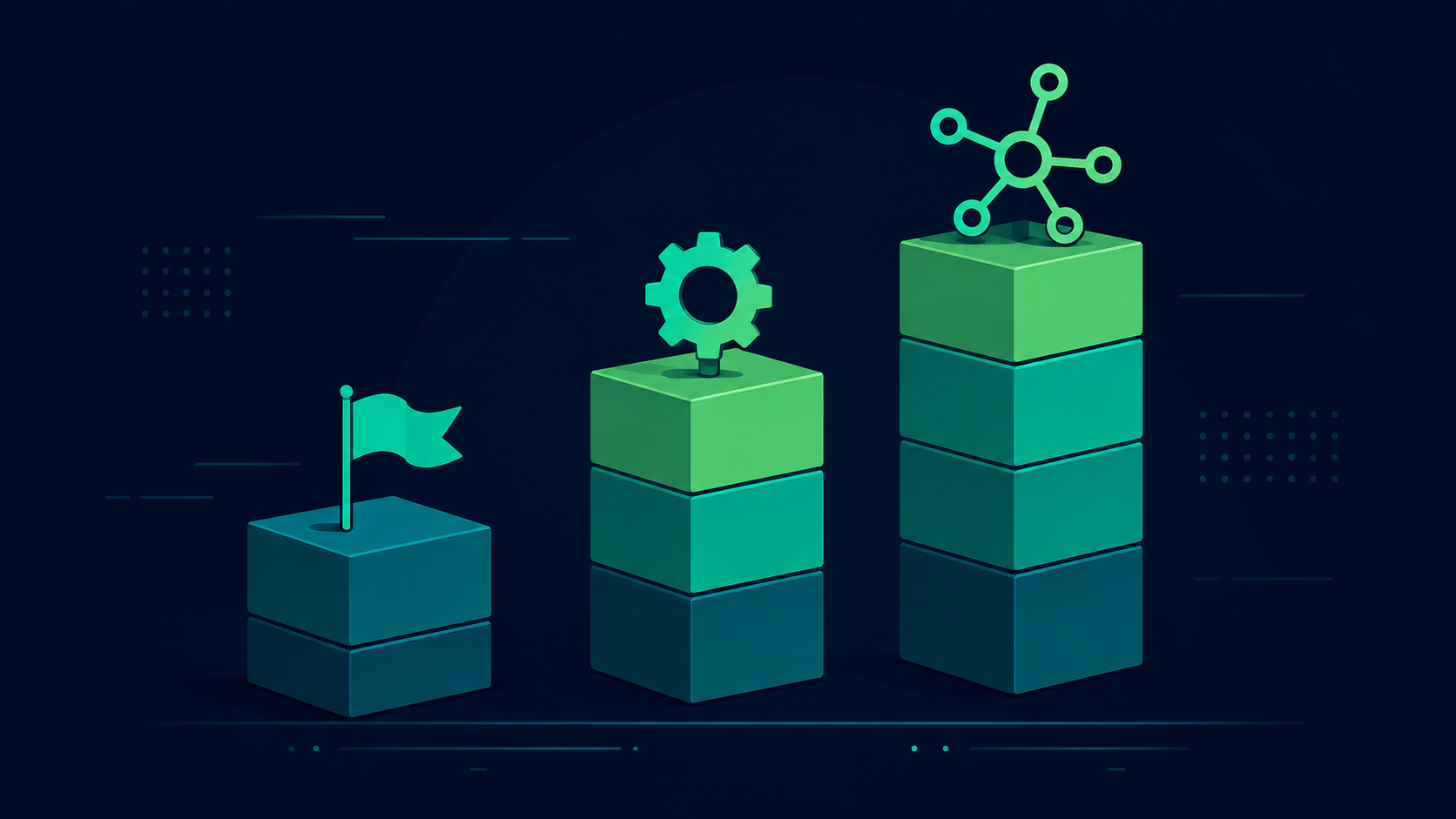
A tightly scoped MVP or single-workflow tool - one core feature, minimal integrations, built to prove a concept or automate one specific process - typically runs ₹2–6 lakh and takes 1–3 months. This is the right starting point for most first-time software buyers: narrow scope, fast to build, and it tells you whether the idea holds up before you commit a bigger budget.
A mid-complexity platform - a real product with several integrations, user roles, a proper backend, and a genuine UI - generally lands around ₹6–20 lakh and runs 3–6 months. This is where most growing businesses actually spend, because it's the tier that supports a real, ongoing product rather than a proof of concept.
An enterprise-scale system - deep integration across core business systems, compliance requirements, dedicated multi-person teams, and often a 6–12 month build - commonly starts around ₹25 lakh and can exceed ₹1 crore for genuinely large, multi-module platforms. At this scale, the initial invoice is often the smaller half of the total investment once support and evolution costs are counted.
Hourly and dedicated-team rates, if you're staffing rather than buying a fixed-scope build: blended hourly rates in India typically run $8–20/hour depending on skill level and complexity, while a dedicated team engagement usually prices around ₹60,000–₹1,10,000 per person per month - often more cost-predictable than hourly billing for anything running longer than a couple of months.
Where the Real Cost Hides After Launch
This is the section most pricing guides skip, and it's the one that actually determines whether a project was a good investment or not.
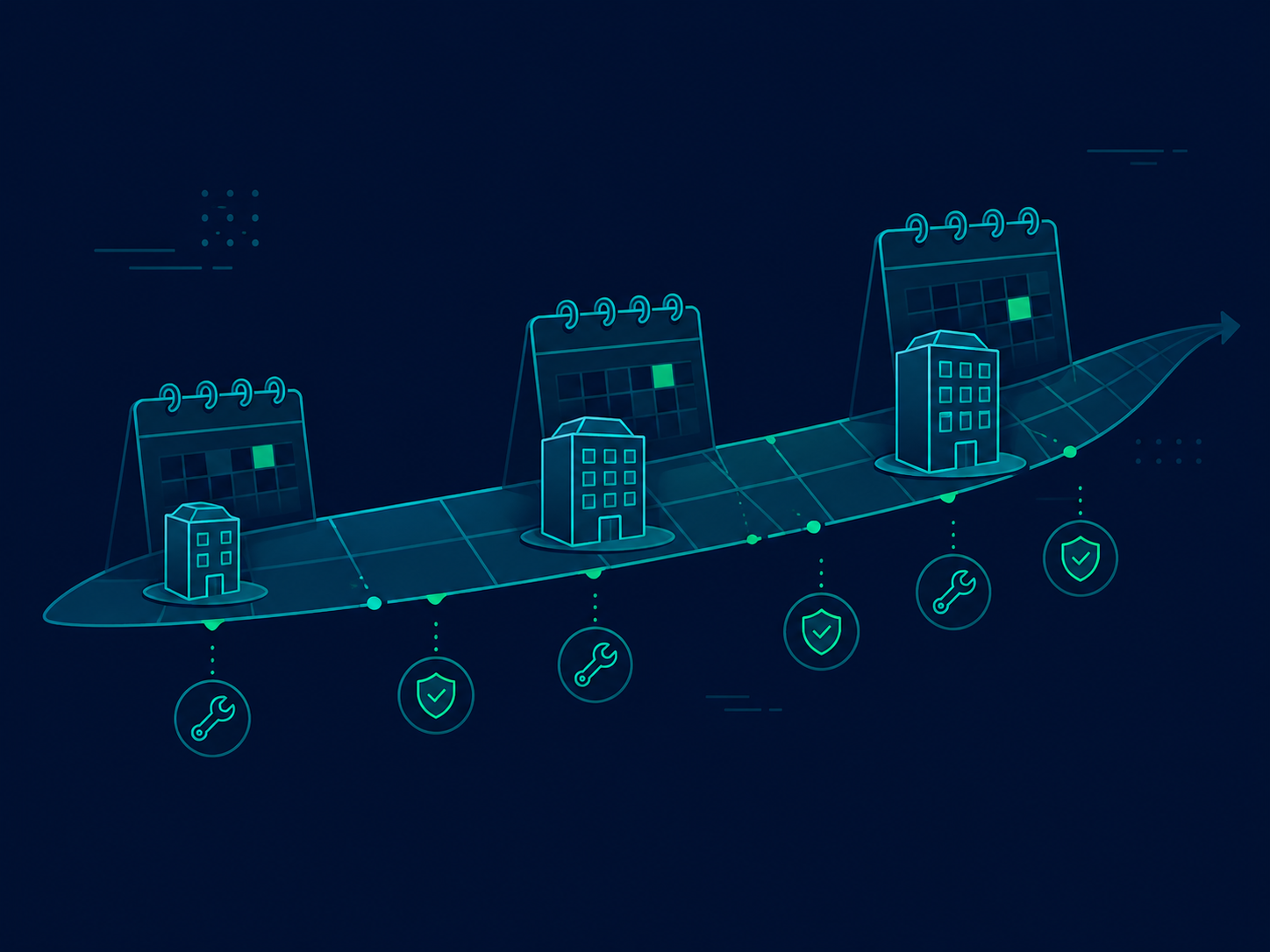
- Ongoing support and maintenance. Bug fixes, security patches, and general upkeep don't stop at launch - budgeting zero for this after go-live is one of the most common mistakes first-time buyers make.
- Infrastructure cost that scales with usage. Hosting and cloud costs grow as real users show up - a system priced for a demo's traffic looks very different once it's actually being used.
- Feature evolution. Real products change after launch, because real usage reveals what the spec missed. Budgeting for zero post-launch development almost never survives contact with actual customers.
- Production defect resolution. Weak QA at build time doesn't eliminate defects - it just moves the cost of finding and fixing them to after launch, where they're more expensive and more visible to users.
- Knowledge dependency. A system with no documentation and a single developer who understands it is a real operational risk, not a hypothetical one - team turnover happens, and the cost shows up the day it does.
Across a five-year horizon, it's common for support and maintenance to add up to more than the original build cost - which means the cheapest initial quote isn't always the cheapest project. A low bid that skimps on architecture, QA, and documentation tends to cost more in total, just later and less visibly.
Pricing Models Worth Understanding Before You Sign
Fixed-price works well for a clearly scoped project with a defined feature set - predictable budgeting, but less room to adapt if requirements genuinely change mid-build.
Time and materials suits projects with evolving requirements or ongoing modernization work - more flexible, but the total cost is less predictable up front, so it needs real trust in the vendor's estimating discipline.
Dedicated team engagements make sense for long-term products that will keep evolving well past the first release - you're buying sustained capacity, not a single deliverable, and it tends to work out more cost-effective than hourly billing once an engagement runs past a couple of months.
What "Cheap" Actually Costs
The lowest quote in a batch of vendor pitches is rarely the cheapest project once you look past launch day. A rushed, underscoped build tends to produce weak architecture that hits scaling limits early, thin QA that surfaces as recurring production bugs, and missing documentation that makes every future change slower and more expensive than it should be. None of that shows up in the initial quote - it shows up in support tickets, in a rebuild eighteen months later, or in a developer who has to relearn a system nobody documented.
This is really the same lesson from how to vet a partner before signing anything: the number on the first invoice is only half the real cost. The other half is whether the vendor built something that survives being used.
What This Looks Like With Toadster
Toadster scopes every project the same way - a fixed-phase estimate for the build itself, plus a real conversation about what ongoing support actually looks like, so the number you get isn't just the build invoice with everything else left as a surprise for later. As a software development company in Noida working across both traditional software and AI-native systems, the same discipline applies whether the project is a straightforward internal tool or a full platform build.
If you want the broader picture on how we approach a build, our software development team covers custom platforms, web applications, and enterprise systems. And if softwareI is part of the roadmap, our page on Software development company in Noida work covers the compliance and architecture side specifically.
The Number That Actually Matters
The real question isn't "what does this cost to build" - it's "what will this cost to own for the next few years." A cheaper build that turns into a support nightmare isn't actually the cheaper project; it just moved the real cost to a part of the timeline nobody budgeted for.
If you want a real number for your specific project - build cost and the ongoing picture, not just a headline figure - talk to Toadster for a scoping conversation.