
Generative AI

Agentic AI in 2026: How Autonomous AI Agents Are Transforming Business Operations

Generative AI is reshaping how work gets done - but the real shift in 2026 is about AI that acts, not just answers. Here's what that means for you.

Toadsters Team

AI Development Insights

June 4, 2026
8 min read
Share:
Agentic AI in 2026: How Autonomous AI Agents Are Transforming Business Operations
Generative AI

What Is Generative AI Actually Doing in 2026?

Generative AI means AI systems that produce new content - text, code, images, decisions - based on patterns learned from data. That definition hasn't changed. What has changed is the scope of what "producing output" now includes.

In 2026, Generative AI has moved well past the chatbot phase. The systems getting serious attention today don't wait for a prompt. They pursue goals, break work into steps, use tools, and complete tasks without a human in the loop at every decision point. That shift has a name: agentic AI.

What Is Agentic AI and How Is It Different?

Agentic AI means AI that plans and executes multi-step tasks autonomously. Where a standard language model answers a question, an AI agent takes on an objective - research a competitor, write and test a piece of code, process an invoice - and works through it independently.

The difference matters more than it sounds. When you give a generative model a prompt, you are the planner. When you deploy an AI agent, the model does the planning. That changes what you need to know, what you need to audit, and what can go wrong.
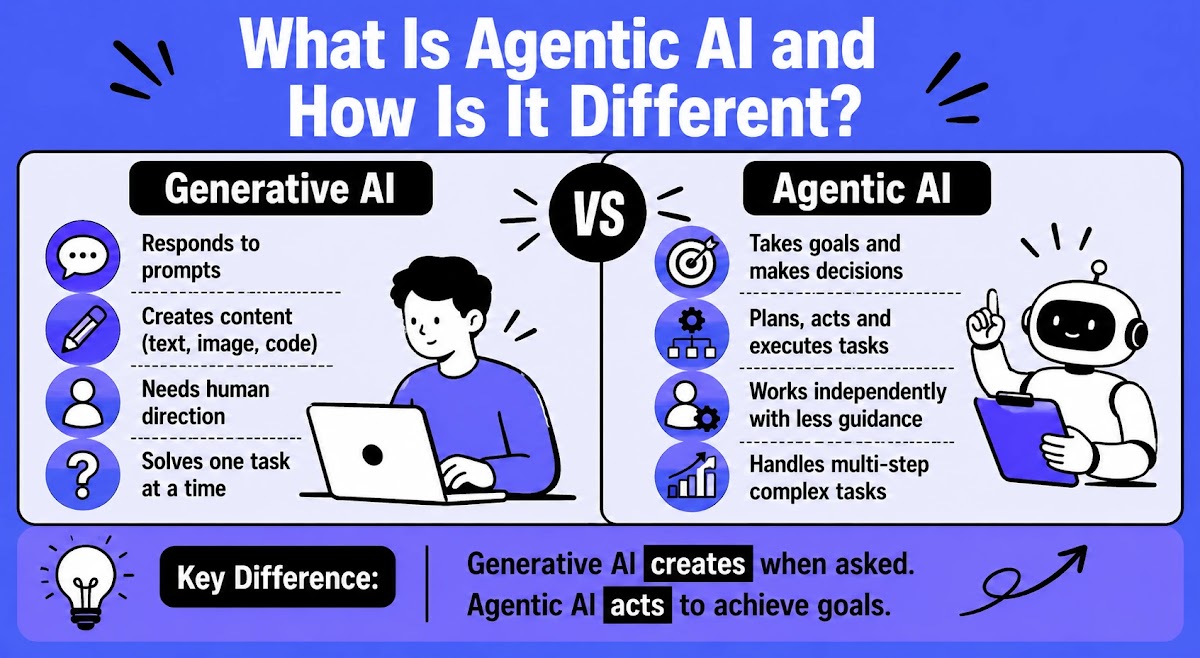
How agentic AI differs from generative AI in 2026 enterprise workflows

How Do AI Agents Actually Work?

An AI agent typically combines 4 components:

  • A reasoning model - usually a large language model (LLM) that interprets goals and generates plans
  • Tool access - the ability to search the web, run code, query databases, or call external APIs
  • Memory - short-term context within a session, and sometimes long-term storage via vector databases
  • An orchestration layer - logic that determines what to do next based on intermediate results

Frameworks like LangGraph, CrewAI, and AutoGen have made it practical to wire these components together. OpenAI's Agents SDK and Anthropic's Model Context Protocol (MCP) are pushing toward standardized ways for agents to interact with external systems - which is what makes enterprise deployment viable rather than experimental.

Building production-grade agents is rarely a single-framework decision. It's an LLM development effort that brings model selection, retrieval, tools, and evaluation under one roof.

Why Are Multi-Agent Systems Getting So Much Attention?

A single agent hits limits - context windows fill up, tasks get too complex, specialization helps. Multi-agent systems solve this by assigning different agents to different roles: one researches, one writes, one validates. They communicate through structured handoffs.

This architecture mirrors how teams work. A senior developer doesn't write every line of code - they review, delegate, and integrate. Multi-agent AI is applying the same logic to automated workflows.

The practical result: tasks that took days of coordination can run in minutes, with agents handling the hand-offs that used to require human scheduling.
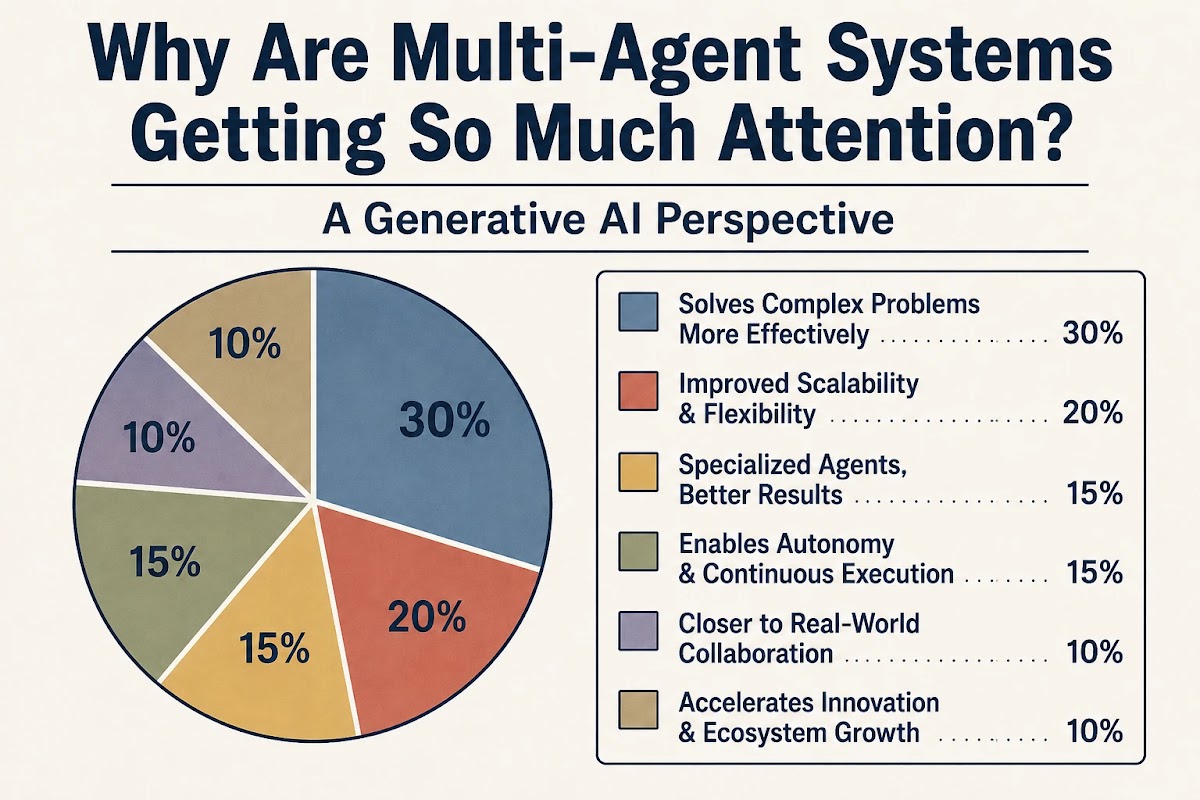
How multi-agent AI systems coordinate across enterprise workflows

What Are the Real Use Cases in Enterprise Settings?

Autonomous AI agents are being deployed across 3 primary categories right now:

  • Software development - agents that write code, run tests, catch errors, and submit pull requests. Tools like Claude Code operate in this space.
  • Customer operations - agents that handle tier-1 support, pull from knowledge bases, and escalate intelligently when they reach the edge of their competence
  • Finance and compliance - agents that process documents, flag anomalies, and generate audit trails without manual review at every step

Healthcare is an emerging area, with agents being tested for clinical documentation and prior authorization workflows - both notoriously slow processes with high administrative cost.

The teams seeing the cleanest results aren't running pilots in isolation. They're treating it as an AI automation program: scoping one workflow, instrumenting it, expanding outward, and folding the learnings back into the architecture.

What Should You Actually Be Cautious About?

Autonomy introduces risk. An agent that can act can also act incorrectly - and without a human reviewing each step, errors can compound before anyone notices.

3 specific risks are worth taking seriously:

  • Hallucination in action - a model that confidently retrieves wrong information and then acts on it can cause real damage, not just an awkward response
  • Scope creep - agents with broad tool access can take actions outside their intended scope; permission design matters
  • Auditability gaps - if you can't trace why an agent made a decision, you have a compliance problem, not just a technical one

Retrieval-Augmented Generation (RAG) helps with factual grounding. Tight permission scoping helps with access control. Neither is a complete answer. This is where AI consultation earns its keep - the architecture and governance decisions you make before the first agent ships determine how much you'll spend reworking it later.

Where Is This Actually Heading?

The next wave isn't smarter individual agents - it's better coordination between them, and cleaner integration with existing enterprise systems. The companies that will see the most value aren't building AI for its own sake. They're identifying the 3 or 4 workflows in their business where autonomous execution reduces the most friction, and starting there.

The question isn't whether autonomous AI fits your industry. It's whether you've mapped the workflows where delayed decisions or manual hand-offs are costing you the most. That's the work custom AI solutions are designed for - building the connective tissue between your data, your systems, and the decisions that need to happen between them.

Tags

Generative AIAgentic AIAI AgentsMulti-Agent SystemsEnterprise AI

Toadsters Team

AI Development Insights

Toadsters Team is a AI Development Insights at Toadster, specializing in Generative AI. Bringing practical insights and cutting-edge knowledge to help businesses navigate the Generative AI landscape.

Frequently Asked Questions

Quick answers to common questions about this topic

Agentic AI is AI that takes actions to complete a goal, rather than just generating a single response. It plans, uses tools, and works through multi-step tasks without requiring a human to guide every move.

Ready to Transform Your Business with AI?

Explore how Toadster can help you harness the power of artificial intelligence to drive growth, efficiency, and innovation.

Agentic AI in 2026: Benefits, Use Cases & Enterprise Impact